
 EN
EN



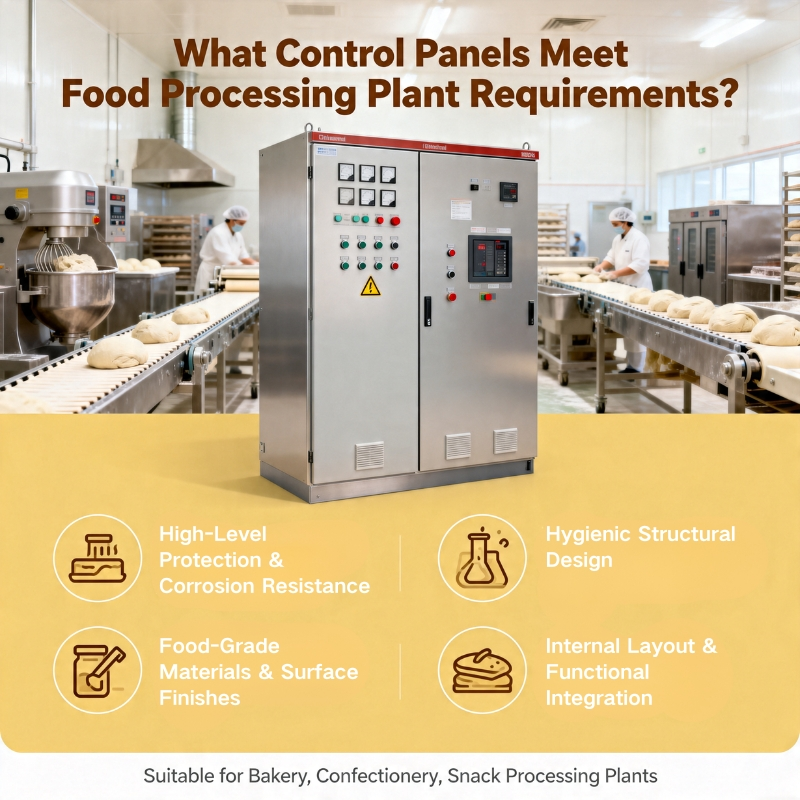
खाद्य प्रसंस्करण के वातावरण विद्युत नियंत्रण उपकरणों के लिए सबसे कठोर वातावरणों में से एक हैं। दैनिक उच्च-दबाव वॉशडाउन, अम्लों और सफाई रसायनों के संपर्क, तापमान में उतार-चढ़ाव और कड़ी खाद्य सुरक्षा ऑडिट के बीच, मानक औद्योगिक नियंत्रण पैनल बस टिक नहीं पाते हैं — और इससे भी बदतर, वे दूषण का जोखिम बन सकते हैं।
तो वास्तव में कौन-से नियंत्रण पैनल खाद्य प्रसंस्करण संयंत्रों की आवश्यकताओं को पूरा करने के लिए विशेष रूप से डिज़ाइन किए गए हैं? इसका उत्तर केवल एक साधारण IP रेटिंग से कहीं अधिक गहराई तक जाता है। खाद्य एवं पेय पदार्थ उद्योग के लिए एक समग्र नियंत्रण कैबिनेट समाधान प्रदाता के रूप में, हम एक खाद्य-श्रेणी के नियंत्रण पैनल की पाँच आवश्यक विशेषताओं का विश्लेषण करते हैं।
1. स्वच्छता-अनुकूल एन्क्लोज़र डिज़ाइन: बैक्टीरिया के छिपने के लिए कोई स्थान नहीं
खाद्य संयंत्र में, प्रत्येक सतह महत्वपूर्ण है। एक मानक नियंत्रण कैबिनेट, जिसमें बाहरी स्क्रू, तीव्र कोने और बाहरी हैंडल हों, एक दूषण का खतरा है। खाद्य-श्रेणी के नियंत्रण पैनलों को स्वच्छता-अनुकूल डिज़ाइन सिद्धांतों का पालन करना आवश्यक है:
पूर्ण वेल्डेड, सीम-रहित निर्माण – ऐसे अंतरालों को समाप्त करता है जहाँ खाद्य कण या बैक्टीरिया जमा हो सकते हैं।
चिकनी, गोलाकार कोने (त्रिज्या ≥ 3 मिमी) – जमाव को रोकता है और सफाई को प्रभावी बनाता है।
ढलान वाले शीर्ष (न्यूनतम 15°) – तरल पदार्थों के कैबिनेट के ऊपर एकत्रित होने को रोकता है।
समतल-माउंटेड दरवाज़े के कब्जे और लैच – कोई बाहरी ब्रैकेट या दरारें नहीं।
कोई उजागर थ्रेड या निकले हुए बोल्ट नहीं – सभी फास्टनर्स को संटरसंक या आवरित किया जाना चाहिए।
विनियामक संरेखण: ये डिज़ाइन विशेषताएँ आपको अच्छी विनिर्माण प्रथाओं (GMPs) के अनुपालन में सहायता प्रदान करती हैं।
2. सामग्री का चयन: क्यों 304 और 316 स्टेनलेस स्टील अनिवार्य हैं
आवरण सामग्री को दैनिक कास्टिक सफाई एजेंट्स, क्लोरीनयुक्त सैनिटाइज़र्स और अम्लीय खाद्य अवशेषों का प्रतिरोध करने में सक्षम होना चाहिए।
|
सामग्री |
संक्षारण प्रतिरोध |
के लिए सबसे अच्छा |
|
304 स्टेनलेस स्टील |
हल्के रसायनों और आर्द्रता के प्रति अच्छी प्रतिरोधक क्षमता |
शुष्क प्रसंस्करण क्षेत्र, डेयरी, बेकरी (प्रत्यक्ष वॉशडाउन के बिना) |
|
316 स्टेनलेस स्टील |
क्लोराइड्स, अम्लों और उच्च लवण वातावरण के प्रति उत्कृष्ट प्रतिरोधक क्षमता |
मांस/पोल्ट्री प्रसंस्करण, सीफूड, पिकलिंग, और बार-बार कॉस्टिक वॉशडाउन वाले क्षेत्र |
|
पाउडर-कोटेड कार्बन स्टील |
खाद्य प्रसंस्करण के लिए अनुशंसित नहीं |
इससे बचें – समय के साथ कोटिंग विफल हो जाएगी |
हमारा मानक: अधिकांश खाद्य प्रसंस्करण लाइनों के लिए, हम अनुशंसा करते हैं 304 स्टेनलेस स्टील शुष्क से आर्द्र क्षेत्रों के लिए, और 316 स्टेनलेस स्टील गीले क्षेत्रों, नमकनी विस्तार (ब्राइन) के संपर्क, या उच्च-सैनिटाइज़र वातावरण के लिए।
3. उच्च-दबाव वॉशडाउन सुरक्षा: IP66, IP69, और IP69K
खाद्य संयंत्रों की दैनिक सफाई की जाती है — कभी-कभी एक से अधिक बार — गर्म पानी (अधिकतम 80°C / 176°F) और उच्च-दबाव वाले स्प्रे (अधिकतम 1450 psi) के साथ।
IP66 (शक्तिशाली पानी की धाराएँ, कोई प्रवेश नहीं)।
प्रत्यक्ष वॉशडाउन के लिए अनुशंसित: IP69K – उच्च-दबाव और उच्च-तापमान भाप सफाई के खिलाफ परीक्षण किया गया।
IP69K इनक्लोज़र्स में विशेष गैस्केट्स (खाद्य-श्रेणी के सिलिकॉन), कैप्टिव स्क्रू और दबाव-समायोजन वाल्व का उपयोग किया जाता है ताकि आंतरिक संघनन को रोका जा सके।
सभी केबल प्रवेश बिंदुओं पर उपयोग करना आवश्यक है: स्टेनलेस स्टील कम्प्रेशन ग्लैंड्स जिनकी IP69K रेटिंग हो।
4. दूषण के बिना शीतलन: क्लोज़्ड-लूप बनाम एयर-टू-एयर
पारंपरिक पंखा-और-फ़िल्टर शीतलन वातावरण की वायु को अंदर खींचता है — जो खाद्य संयंत्र में नमी, सफाई के वाष्प और यहाँ तक कि वायु में तैरने वाली वसा भी शामिल करती है। यह आंतरिक घटकों को त्वरित रूप से नष्ट कर देता है और आपके स्वच्छता प्रयासों को नकार देता है।
खाद्य सुरक्षित थर्मल प्रबंधन विकल्प:
|
विधि |
यह कैसे काम करता है |
फायदे |
नुकसान |
|
क्लोज़्ड-लूप एयर कंडीशनर |
बाहरी विनिमय के बिना आंतरिक वायु को ठंडा करता है |
कोई दूषण नहीं; IP69K अखंडता को बनाए रखता है |
उच्च प्रारंभिक लागत |
|
एयर-टू-एयर हीट एक्सचेंजर |
सील किए गए कोर के माध्यम से ऊष्मा का स्थानांतरण करता है |
बाहरी वायु के प्रवेश का शून्य स्तर; कम रखरखाव |
उच्च ऊष्मा भार के लिए कम शीतलन क्षमता |
|
पासिव कूलिंग |
बड़ा एनक्लोजर सतह क्षेत्र |
कोई गतिमान भाग नहीं; सबसे कम लागत |
यह केवल कम-शक्ति वाले PLC/एचएमआई के लिए काम करता है |
5. घटकों का चयन: खाद्य-श्रेणी के, संघनन-रोधी और ट्रेसेबल
आंतरिक घटक एनक्लोजर के समान ही महत्वपूर्ण हैं। हम निम्नलिखित को निर्दिष्ट करते हैं:
कॉन्फॉर्मल-कोटेड सर्किट बोर्ड – PLC, पावर सप्लाई और ड्राइव्स को अवशेष आर्द्रता से बचाता है।
हर्मेटिकली सील्ड रिले और कॉन्टैक्टर – संपर्क ऑक्सीकरण को रोकता है।
एफडीए-अनुपालन केबल और गैस्केट सामग्री – सिलिकॉन गैस्केट (फ़्थैलेट्स के बिना), तेल-प्रतिरोधी, वॉशडाउन-रेटेड जैकेट वाले UL-सूचीबद्ध केबल (उदाहरण के लिए, UL 1277, TC-ER)।
लेज़र एटिंग के साथ पूर्ण लेबलिंग – चिपकने वाले लेबल गीले वातावरण में उखड़ जाते हैं। हम कैप्शन को सीधे स्टेनलेस स्टील पैनल और टर्मिनल कवर पर लेज़र एटिंग के माध्यम से अंकित करते हैं।
खाद्य प्रसंस्करण में एक मानक 'औद्योगिक' पैनल क्यों विफल हो जाता है
जब एक सामान्य उद्देश्य नियंत्रण पैनल को खाद्य संयंत्र में स्थापित किया जाता है, तो यह होता है:
|
मुद्दा |
परिणाम |
|
हिंगेस के माध्यम से पानी का प्रवेश |
शॉर्ट सर्किट, अनियोजित डाउनटाइम |
|
304 (अपर्याप्त ग्रेड) से जंग लगना |
दूषण का जोखिम, ऑडिट में असफलता |
|
खुले शीतलन वेंट |
पैनल के अंदर फफूंद का विकास |
|
दरारें और तीव्र किनारे |
जीवाणुओं के आश्रयस्थल, जीएमपी के प्रति गैर-अनुपालन |
|
कागज या प्लास्टिक लेबल |
गिर जाना, रखरखाव के दौरान गलत पहचान |
ये विफलताएँ उत्पादन बंद करने, उत्पाद वापसी और नियामक जुर्माने का कारण बनती हैं। एक उचित खाद्य-ग्रेड नियंत्रण पैनल की लागत लगभग हमेशा एक अप्रत्याशित शटडाउन से कम होती है .
क्या आप अपने खाद्य प्रसंस्करण नियंत्रण अवसंरचना को अपग्रेड करने के लिए तैयार हैं?
हमारी इंजीनियरिंग टीम से संपर्क करें जो आपके वर्तमान पैनल विनिर्देशों की कोई दायित्व नहीं लेने वाली समीक्षा प्रदान करेगी। हम आपको एक स्वच्छता-अनुकूल नियंत्रण पैनल प्रस्ताव प्रदान करेंगे आपके सैनिटेशन प्रोटोकॉल और उत्पादन वातावरण के अनुसार अनुकूलित।
#खाद्य प्रसंस्करण नियंत्रण पैनल, #स्टेनलेस स्टील कैबिनेट, #स्वच्छता-अनुकूल डिज़ाइन, #नियंत्रण_पैनल , #विद्युत_नियंत्रण_पैनल ,#खाद्य सुरक्षा
विषय-सूची
- 1. स्वच्छता-अनुकूल एन्क्लोज़र डिज़ाइन: बैक्टीरिया के छिपने के लिए कोई स्थान नहीं
- 2. सामग्री का चयन: क्यों 304 और 316 स्टेनलेस स्टील अनिवार्य हैं
- 3. उच्च-दबाव वॉशडाउन सुरक्षा: IP66, IP69, और IP69K
- 4. दूषण के बिना शीतलन: क्लोज़्ड-लूप बनाम एयर-टू-एयर
- 5. घटकों का चयन: खाद्य-श्रेणी के, संघनन-रोधी और ट्रेसेबल
- खाद्य प्रसंस्करण में एक मानक 'औद्योगिक' पैनल क्यों विफल हो जाता है