
 EN
EN



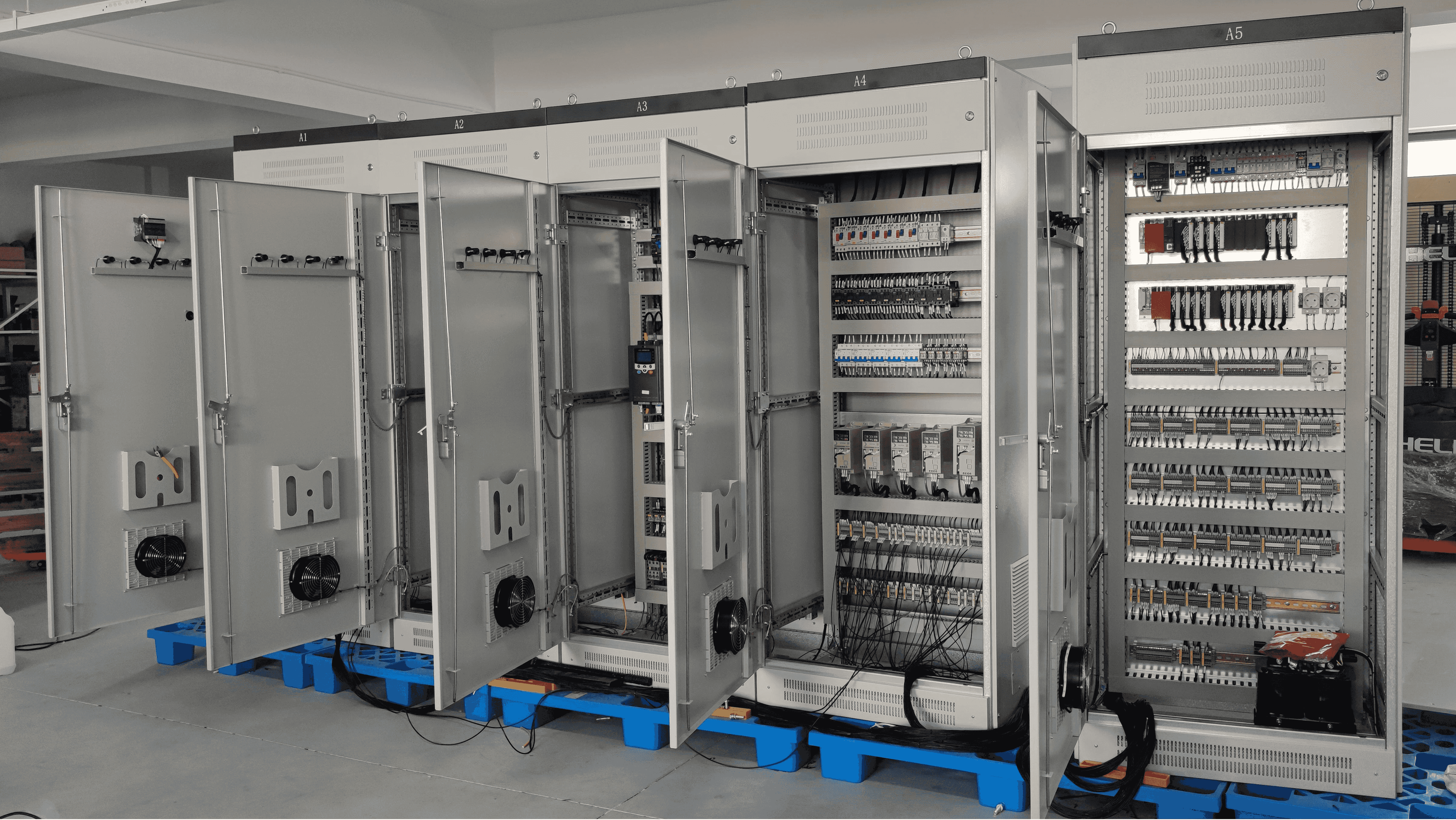
Understanding the Role and Components of LV Switchgear
What Is LV Switchgear and What Are Its Core Functions?
Low voltage or LV switchgear basically manages electrical circuits running under 1000 volts through centralized systems. The main job of these systems boils down to three key areas. First they protect against problems such as short circuits by detecting issues and cutting them off quickly. Second they control how power gets distributed so nothing gets overloaded. And third they isolate equipment when needed for safe maintenance work. When everything runs smoothly thanks to proper LV switchgear installation, businesses see less downtime and improved workplace safety across factories, warehouses and other industrial environments where reliable electricity matters most.
Key Components of Low Voltage Switchgear Systems
Modern LV switchgear comprises:
- Circuit breakers: Automatically interrupt fault currents, with variations like molded-case (MCCB) and miniature (MCB) breakers for specific loads.
- Busbars: Conductors that distribute power between components.
- Protective relays: Monitor electrical parameters like current and voltage to trigger circuit disconnection.
- Fuses and disconnect switches: Provide backup protection and manual control.
These components work synergistically to maintain system integrity, with some assemblies rated for currents up to 6,300A, ensuring scalability for diverse applications.
The Growing Importance of LV Switchgear in Modern Electrical Infrastructure
The market for low voltage switchgear grew at around 7.2% per year between 2021 and 2023 mainly because of the push toward renewable energy sources and the expansion of smart grids across cities. Solar panels and wind turbines need careful control over electricity flow, which is where LV switchgear comes in handy. These systems help manage the transition to cleaner energy while also protecting workers from dangerous arc flashes that can happen in crowded electrical setups. Cities upgrading their infrastructure and factories automating production lines depend heavily on this equipment too. The gear helps stabilize unpredictable power demands and cuts down on wasted energy by roughly 15%, something manufacturers are definitely taking notice of as they look for ways to cut costs without sacrificing safety.
Matching LV Switchgear to Application Requirements
Assessing Load Profiles and System Demands for Proper Selection
Effective LV switchgear selection begins with a detailed analysis of load profiles, including peak demand—typically 120—150% of normal load in industrial settings—and harmonic distortion levels. Industry studies show 63% of electrical failures stem from mismatched equipment ratings (2023 Power Systems Report). To align specifications:
- Calculate total connected load (kVA) and diversity factor
- Verify short-circuit current ratings against available fault currents
- Account for future expansion using a 25—40% capacity buffer
In manufacturing plants, motor starting currents can reach 600% of full-load amps, necessitating switchgear with graded overcurrent protection.
Industrial vs. Commercial Applications of LV Switchgear
| Parameter | Industrial | Commercial |
|---|---|---|
| Operating Cycles | 10,000+ operations/year | 500—2,000 operations/year |
| Environment | High dust/temperature | Climate-controlled |
| Protection Focus | Motor starting currents | Ground fault prevention |
| Typical Configuration | Draw-out circuit breakers | Fixed molded-case breakers |
Industrial installations prioritize arc-resistant construction (withstand capacities up to 40 kA), while commercial systems emphasize space efficiency through modular designs.
Integrating LV Switchgear with Switchboards and Power Distribution Networks
Modern LV systems require seamless coordination between switchgear and switchboards:
- Voltage Coordination: Match switchgear’s 690V AC rating with switchboards’ 600V AC capacity as specified in IEC 61439-2
- Selective Coordination: Align time-current curves within 0.1—0.25 second bands
- Digital Integration: Use IEC 61850-compliant communication protocols for real-time monitoring
A 2022 case study demonstrated 92% fault localization accuracy when combining LV switchgear with intelligent electronic devices (IEDs) in ring-main networks.
Ensuring Compliance with International Safety Standards
IEC 61439 and UL 891: Key Standards for LV Switchgear Design and Testing
Low voltage switchgear needs to comply with IEC 61439 specifications covering mechanical strength, temperature control during operation, and ability to withstand short circuits, which helps equipment work across different countries without compatibility issues. For installations in North America, there's an additional layer of testing through UL 891 standards that focuses specifically on how circuit breakers are set up and the integrity of busbar connections. When manufacturers get UL certification, their products actually go through around 100,000 mechanical cycles as part of testing, which is three times what the IEC standard requires. This extra testing proves that the gear can handle the constant switching demands typical in manufacturing plants and other heavy industrial settings where equipment gets used repeatedly throughout shifts.
ANSI/NEMA Guidelines and NEC Requirements for North American Installations
ANSI/NEMA standards define enclosure types (e.g., NEMA 12 for dust-tight designs) and fault current ratings aligned with the National Electrical Code (NEC). The 2023 NEC updates mandate arc energy reduction methods for LV switchgear operating above 1,200A, requiring features such as maintenance-mode disconnect switches or zone-selective interlocks.
Navigating Regional Differences: IEC vs. ANSI/NEMA Preferences
While IEC standards dominate 75% of global markets, ANSI/NEMA frameworks govern 90% of U.S. commercial installations due to stricter arc flash labeling requirements. Engineers specifying LV switchgear for multinational projects often use dual-certified assemblies compliant with both IEC 61439-2 and UL 1558, though these typically cost 18—22% more than region-specific alternatives.
Protection Features: Overcurrent, Short Circuit, and Arc Flash Safety
Overcurrent and Short Circuit Protection Mechanisms in LV Switchgear
Low voltage switchgear today incorporates several layers of protection mechanisms. Thermal magnetic circuit breakers work by combining two different elements: one part reacts to long term overloads through a bimetallic strip, while another component trips immediately when faced with short circuits that reach at least ten times the normal current level. These combined features help clear electrical faults within less than 40 milliseconds according to industry standards like IEEE C37.20.1 from 2023, which goes a long way toward protecting equipment and reducing dangerous arc flashes. When dealing with systems where continuous operation is absolutely essential, something called zone selective interlocking comes into play. This technology makes sure that only the necessary breakers trip first, keeping other parts of the system running smoothly even when problems occur elsewhere.
Arc Flash Mitigation in Modern LV Switchgear Design
Modern arc flash prevention systems now combine light intensity sensors with current gradient monitoring tech that can spot dangerous arcs in just over a millisecond. When an arc occurs, pressure activated vents channel the explosive force away from workers, cutting down on incident energy by around 85% when compared to older equipment according to NFPA standards from 2023. The passive containment systems don't need any extra power source either, so they keep working even if there's a power outage, offering dependable protection without needing regular maintenance checks. All these improvements help facilities meet the new NEC 2023 requirements found in Article 240.87. This section specifically demands reduced arc energy levels for circuit breakers rated 1,200 amps or higher, something many industrial operations are struggling with as they upgrade their electrical infrastructure.
Case Study: Improving System Reliability Through Coordinated Protection
An automotive manufacturing facility located somewhere in the Midwest managed to cut down on production stoppages by nearly half after they upgraded their low voltage switchgear systems with these new adaptive protection relays along with ZSI logic technology. The engineering team spent time analyzing where faults might occur in the electrical circuits and fine tuned those trip settings so when there was that big 15kA short circuit incident last month, only one specific section of the plant lost power while everything else kept running smoothly at around 98% selectivity. After all the upgrades were completed, thermal imaging showed absolutely no signs of lingering damage anywhere in the system, which means it should last well into the future as originally predicted - probably close to 25 years before needing major work. What happened here has become something other plants look at when trying to meet those IEC 60947-2 standards for safety and reliability in industrial electrical systems.
Evaluating Quality, Durability, and Manufacturer Credibility
Assessing Build Quality and Long-Term Durability of LV Switchgear
Durability assessment should include verification against EN 45552:2020, which mandates accelerated testing simulating 10—15 years of operational stress—including thermal cycling, mechanical shocks, and humidity exposure—within 6—8 weeks. High-quality LV switchgear should achieve a Mean Time Between Failures (MTBF) exceeding 100,000 hours and exhibit ≤1% annual degradation in insulation resistance.
| Durability Indicator | Benchmark Value | Test Method |
|---|---|---|
| Mechanical Lifespan | 20,000+ cycles | IEC 61439-1 |
| Short-Circuit Withstand | 50 kA/1 sec | ANSI C37.20.1 |
| Temperature Resistance | -25°C to +70°C | IEC 60068-2 |
Emerging synthetic durability metrics link longevity to lifecycle costs. For example, units achieving ≥95% material recovery at end-of-life reduce replacement expenses by $12,000—$18,000 per unit over two decades (CEN 2024 Report).
The Role of Predictive Maintenance and Digital Monitoring in Enhancing Performance
The latest IoT sensors are making it possible to keep tabs on contact wear measured in microns lost and track gas density levels in those SF6 insulated systems around the clock. With some smart data analysis tricks up their sleeve, engineers can now spot potential problems at busbar joints anywhere from three to five months before they actually happen. They do this by looking at how heat builds up over time compared to regular usage patterns. Plants that have switched to this predictive maintenance approach see roughly half as many unexpected shutdowns compared to facilities still sticking with old school maintenance calendars based purely on time intervals. The FMEA Institute published these findings back in 2023, confirming what many industry insiders already suspected about the benefits of smarter maintenance strategies.
Partnering with Certified Manufacturers and Accredited Testing Laboratories
Prioritize manufacturers holding both ISO 9001 and IEC 61439 certifications, which require annual third-party audits of production processes. Warning signs include suppliers unable to provide:
- Material traceability for copper busbars and silver-nickel contacts
- Type-test certificates from ILAC-accredited laboratories
- Historical data on failure rates spanning 10+ years
Validation through client case studies is essential—reputable manufacturers typically showcase 20—30 verified installations demonstrating ≥98% uptime across varied environmental conditions.
FAQ
What is the primary function of LV switchgear?
LV switchgear primarily manages electrical circuits under 1000 volts. It protects against short circuits, controls power distribution, and isolates equipment for safe maintenance.
What are the main components found in LV switchgear systems?
Modern LV switchgear includes circuit breakers, busbars, protective relays, fuses, and disconnect switches. These components work together to maintain system integrity.
Why is LV switchgear important in renewable energy projects?
LV switchgear plays a critical role in controlling electricity flow in solar and wind energy projects, helping manage the transition to cleaner energy and ensuring safety through preventing arc flashes.
How is LV switchgear tailored to different applications?
LV switchgear is chosen based on detailed load analysis, considering factors like peak demand and future expansion needs. This ensures the switchgear meets specific industrial or commercial requirements.
What standards do LV switchgear comply with?
LV switchgear must comply with standards such as IEC 61439, UL 891, ANSI/NEMA guidelines, and NEC requirements, ensuring safety and reliability in various applications.