
 EN
EN



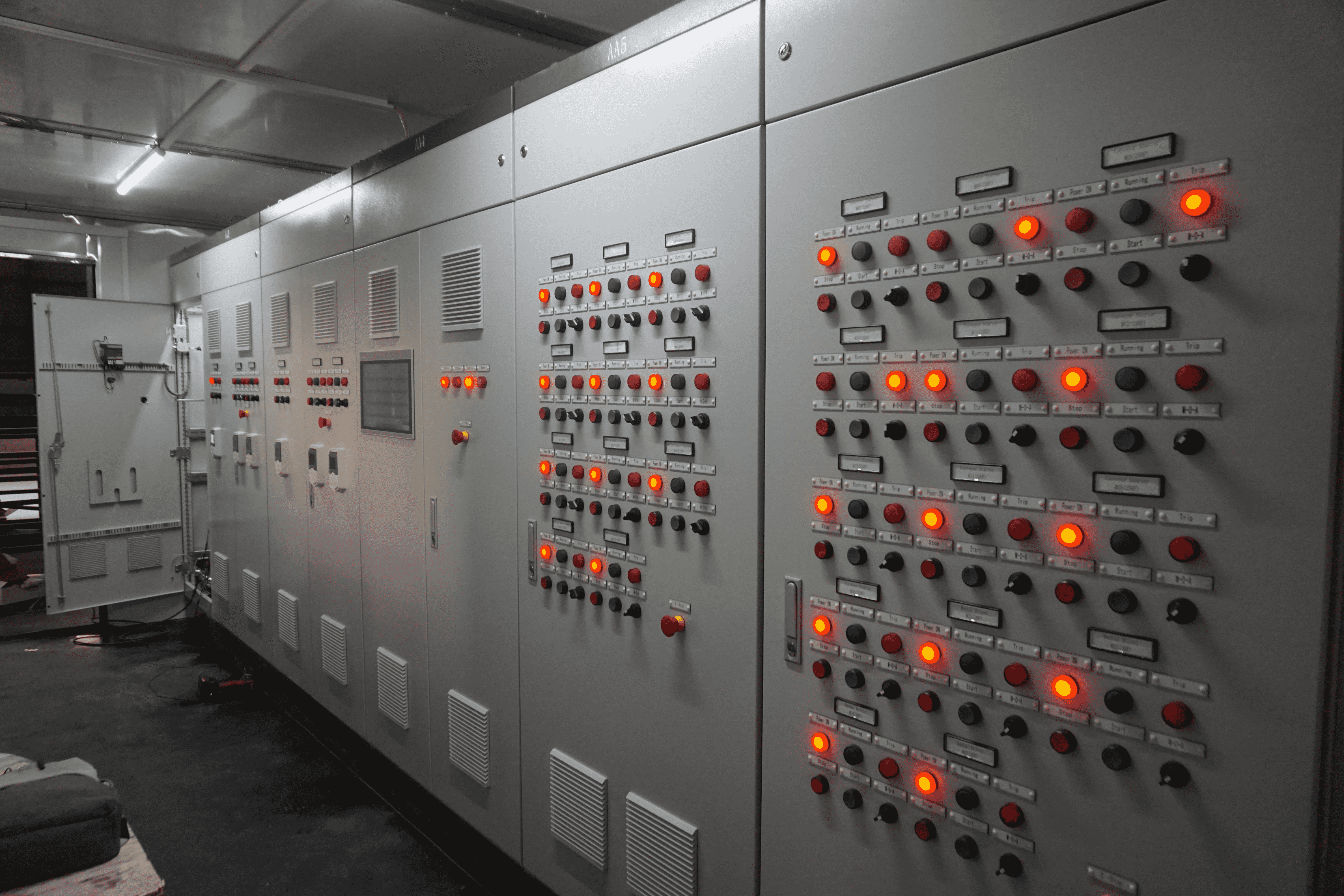
Fundamental Role and Design of MV Switchgear in Power Systems
Function of MV Switchgear in Ensuring System Stability and Reliability
Medium voltage switchgear works in the range from 3.3 kilovolts up to 36 kilovolts and plays a critical role in how electricity gets distributed throughout networks. These systems help isolate problems when they occur, redirect power flow when there are disruptions, and keep voltages stable across the board. A recent study looking at grid reliability back in 2023 found that when companies optimize their switchgear setups, they actually cut down on power outages by about forty percent for industrial sites. What makes this possible? Well, when something goes wrong like a short circuit happens, the switchgear can cut off bad circuits almost instantly. This quick response stops small issues from turning into bigger ones that might bring down whole substation areas.
Key Components and Their Integrated Operation for Dependable Performance
Modern MV switchgear integrates four critical subsystems:
- Vacuum circuit breakers — interrupt currents up to 25 kA without arc degradation
- Protective relays — detect anomalies using algorithms compliant with IEEE 2024 standards, achieving over 99.8% accuracy
- Busbar systems — copper or aluminum conductors rated for continuous 4,000A loads
- Insulation monitoring — tracks dielectric strength to predict insulation failure 6—8 months in advance
Coordinated through microprocessor controls, these components enable fault clearance in under 50 ms—70% faster than legacy electromechanical systems. Properly maintained units have demonstrated more than 85,000 operational cycles with less than 0.1% performance deviation in accelerated aging tests, supporting reliable service life of 25—30 years.
Critical Safety Features That Enhance MV Switchgear Reliability
Modern MV switchgear incorporates advanced safety mechanisms essential for reliable operation in high-stress environments. These designs mitigate risks associated with arc flashes, overcurrents, and human error while ensuring uninterrupted power delivery.
Arc Fault Protection and Arc-Resistant Design in High-Voltage Environments
Arc resistant switchgear incorporates strong enclosures and special containment paths that help channel dangerous arc flash energy away from workers. Newer designs cut down on the risk of injury by around 80% when compared to older versions, according to tests showing they can contain arcs for over 200 milliseconds as specified in the IEEE C37.20.7-2017 standard. The physical barriers work together with vacuum interrupters inside the equipment to stop arcs from forming when circuits are interrupted or switched off.
Overcurrent Protection and Intelligent Fault Detection Mechanisms
Digital protective relays respond in under 300 ms, enabling precise coordination across devices. Adaptive algorithms analyze current waveforms to differentiate temporary surges from genuine faults, reducing nuisance tripping by 65%. Embedded thermal sensors monitor conductor temperatures in real time, triggering alerts when reaching 85% of design limits, allowing for timely maintenance intervention.
Balancing Operational Accessibility With Safety: The Industry Challenge
Sequential mechanical interlocks enforce safe operating sequences, preventing access to live compartments while breakers are engaged. Such systems address 43% of access-related accidents cited in NFPA 70E-2023. However, manufacturers continue to face challenges in minimizing inspection port dimensions without compromising dielectric integrity—particularly in retrofitted substations with spatial constraints.
Insulation Systems and Voltage Management in MV Switchgear
Insulation Integrity as a Predictor of Long-Term Switchgear Reliability
The quality of insulation has a major impact on how long MV switchgear lasts. A recent study from 2023 found that about two thirds of all failures happen because the insulation breaks down over time. When it comes to materials, stuff like epoxy resins and those composite polymer mixes can handle pretty impressive voltages around 38 kV mark while standing up against dirt and moisture from the environment. Temperature matters too. If things get even just one degree hotter than what they're designed for, the insulation starts to age faster by roughly 14 percent according to NEMA standards from last year. That's why modern equipment often includes partial discharge sensors that pick up on problems when sensitivity drops below 5 picocoulombs. These sensors catch issues early enough so technicians can fix them before something goes completely wrong and causes expensive downtime.
Gas-Insulated vs. Air-Insulated Switchgear: Comparing Reliability and Application Fit
The choice of insulation medium shapes MV switchgear deployment across different settings:
| Characteristic | Gas-Insulated (GIS) | Air-Insulated (AIS) |
|---|---|---|
| Insulation Medium | Sulfur hexafluoride (SF6) | Ambient air |
| Footprint | 60% smaller | Requires spacious layouts |
| Maintenance Frequency | 3—5 year intervals | Annual inspections |
| Cost Premium | 35—40% higher | Baseline pricing |
| Ideal Applications | Urban substations | Industrial plants |
Gas insulated switchgear (GIS) makes use of sulfur hexafluoride gas (SF6), which has about three times the dielectric strength compared to regular air. This allows GIS systems to be much smaller while still maintaining high reliability, making them great choices when there's limited space available in city environments. Air insulated switchgear (AIS) continues to be the go-to option for many industrial settings where budget matters more than physical size constraints. We're seeing more hybrid setups these days too, where engineers install GIS equipment on the most important parts of the electrical system but stick with traditional AIS components for everyday feeder lines. The result? A setup that maintains critical reliability standards without breaking the bank on unnecessary upgrades across the entire facility.
Smart Monitoring and Predictive Diagnostics in Modern MV Switchgear
Advanced monitoring transforms MV switchgear from passive equipment into intelligent nodes capable of predicting and preventing failures. Real-time diagnostics and predictive analytics shift maintenance from reactive to proactive strategies, cutting downtime by up to 40% in industrial operations (Energy Systems Journal, 2023).
Real-Time Monitoring for Early Fault Detection and Predictive Maintenance
Continuous tracking of temperature, partial discharge, and gas pressure allows operators to identify developing issues before they escalate. Vibration analysis in circuit breakers predicts mechanical wear with 92% accuracy, enabling targeted interventions. This approach reduces repair costs by 25% compared to fixed time-based schedules.
IoT Sensors and SCADA Integration Enabling Intelligent Switchgear Networks
IoT-enabled sensors integrated with supervisory control and data acquisition (SCADA) systems create self-diagnosing networks that automatically correlate insulation resistance with humidity, adjust protection settings based on load trends, and generate maintenance alerts upon threshold breaches. This integration cuts diagnostic errors by 60% and sustains 99.97% uptime in utility-scale deployments.
Case Study: Thermal Imaging for Failure Prediction in Industrial Settings
An industrial chemical facility installed infrared imaging equipment to keep an eye on the busbar connections throughout their 15 kV switchgear setup. During periods of maximum load, the thermal monitoring picked up 17 connections running hotter than 85 degrees Celsius. More importantly, it spotted unusual heat signatures nearly two days ahead of what could have turned into serious arc faults. The results speak for themselves really. Over eighteen months, unexpected shutdowns at the plant fell dramatically - around three quarters fewer incidents compared to previous operations. This shows just how valuable thermal analysis can be when it comes to keeping workers safe while also making sure production runs smoothly without constant interruptions.
Maintenance Strategies for Sustained MV Switchgear Performance
Best Practices in Maintenance to Ensure Long-Term Reliability
Proactive maintenance extends MV switchgear service life by 40—60% in industrial environments (Ponemon 2022). Recommended practices include:
- Infrared scanning every six months to detect hotspots in busbars
- SF6 gas analysis using laser-based sensors to assess insulation condition
- Torque verification of 98% of critical connections during annual inspections
Adhering to manufacturer-specified lubrication intervals and contact erosion thresholds preserves component integrity. Utilities following OEM guidelines report 30% fewer unplanned outages.
Risk Assessment and Safe Operating Procedures in High-Voltage Applications
Maintenance in high-voltage environments requires arc flash assessments compliant with ASTM F2508. Lockout-tagout (LOTO) protocols must address key hazards:
| Risk Factor | Mitigation Strategy | Compliance Standard |
|---|---|---|
| Arc flash energy > 40 cal/cm² | Remote racking systems | IEEE C37.20.7 |
| SF6 leakage > 5% annual rate | Dual-seal valve replacements | IEC 62271-203 |
| Partial discharge > 20 pC | Phase insulation reinforcement | ANSI/NETA MTS-2021 |
Dielectric testing at 125% of rated voltage during maintenance reduces post-service failures by 28% compared to untested systems.
Condition-Based vs. Time-Based Maintenance: Effectiveness and Industry Debate
The transition from fixed-interval (every 3—5 years) to condition-based maintenance has reduced repair costs by $18,000 per unit annually (CIGRE 2023). Data shows:
- Time-based approaches perform well in stable grids with less than 2% load fluctuation (85% prediction accuracy)
- Condition-based methods excel in industrial networks with harmonic distortion above 8% THD (92% failure prediction rate)
Despite proven ROI, 63% of operators retain time-based models due to cybersecurity concerns around IoT sensor integration in mission-critical infrastructure.
Frequently Asked Questions
What is MV switchgear and its voltage range?
MV switchgear operates within the medium voltage range of 3.3 kilovolts up to 36 kilovolts, crucial for electricity distribution across networks.
What components are integrated into modern MV switchgear?
Modern MV switchgear integrates vacuum circuit breakers, protective relays, busbar systems, and insulation monitoring for reliable performance.
How does MV switchgear enhance safety in electrical systems?
MV switchgear incorporates arc fault protection, overcurrent protection, and sequential mechanical interlocks, minimizing risks of faults and human error.
What are the differences between GIS and AIS in switchgear?
Gas-Insulated (GIS) systems use SF6 gas for compact design; Air-Insulated (AIS) systems use air, ideal for industrial settings with emphasis on cost-efficiency.
How can smart monitoring benefit MV switchgear?
Smart monitoring enables real-time diagnostics and predictive maintenance, preventing failures and enhancing operational reliability.
Table of Contents
- Fundamental Role and Design of MV Switchgear in Power Systems
- Critical Safety Features That Enhance MV Switchgear Reliability
- Insulation Systems and Voltage Management in MV Switchgear
- Smart Monitoring and Predictive Diagnostics in Modern MV Switchgear
- Maintenance Strategies for Sustained MV Switchgear Performance
- Frequently Asked Questions