
 EN
EN



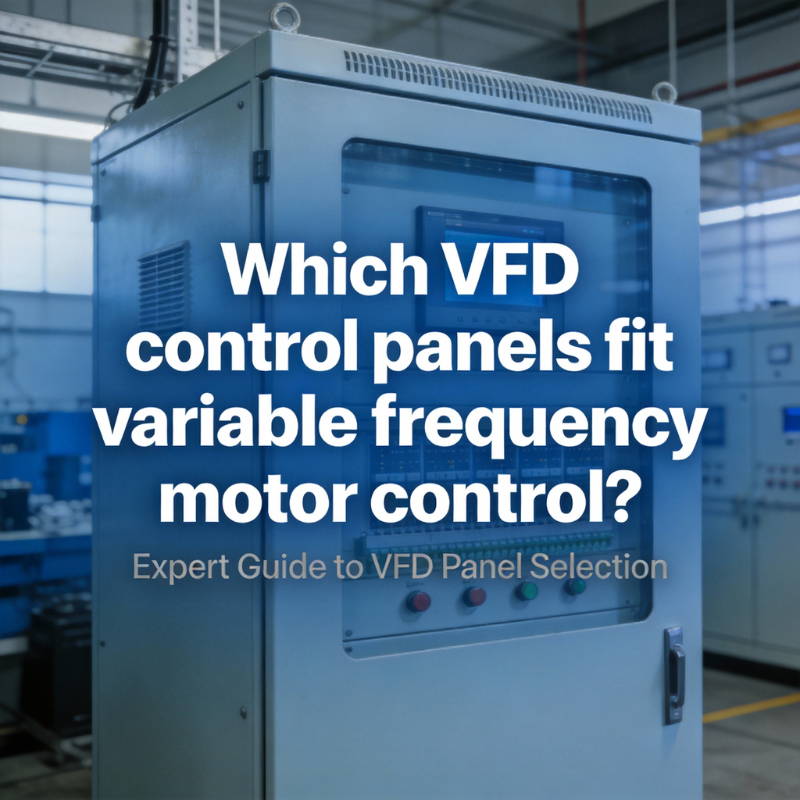
Core Functions and Compliance Requirements of a VFD Control Panel
Essential motor control functions: start/stop, speed regulation, overload/fault protection, and real-time diagnostics
The VFD control panel offers accurate motor control thanks to its four core functions. The start/stop feature lets operators turn motors on and off quickly, usually controlled through PLC systems or HMI panels, which makes everything work together smoothly in production lines. For speed control, the system adjusts frequency to keep RPM within about half a percent accuracy even when loads change, so outputs stay consistent during those tricky variable conditions. When things get too hot, the overload protection kicks in after current goes past 150% of what's normal for over a minute straight, cutting power before motors burn out from overheating. The built-in diagnostic system watches more than thirty different factors at once like temperature readings, vibrations, imbalanced phases, and weird voltage patterns. These checks send early warning signals for maintenance needs, helping factories cut down unexpected shutdowns by roughly forty five percent according to field tests. Plus, all this real time data gets saved automatically, giving plant managers something concrete to measure against past performance and find ways to improve operations going forward.
Critical compliance and environmental specs: IP rating, enclosure material, thermal management, and IEC 61800-3 EMC compliance
The panel has been designed to withstand tough environments both physically and electrically. Its IP54 rating means it can handle dust particles and light water splashes, which makes it work well on factory floors where things get pretty rough. For places with lots of moisture or chemicals around, we use NEMA 4X stainless steel housing that stands up against corrosion even when humidity reaches 95%. When it comes to keeping things cool inside, our thermal system works like this: forced air moves through specially shaped heat sinks so internal temps stay under 40 degrees Celsius, no matter how hot outside gets (up to 50°C!). Electromagnetic compatibility follows IEC 61800-3 standards for Category C3 applications. At full power, total harmonic distortion stays below 5%, and electromagnetic interference drops by at least 15 dBµV. These specs mean equipment will run smoothly alongside delicate instruments and keep operating reliably even when voltage fluctuates between 85 and 265 volts AC.
Matching VFD Control Panel Ratings to Motor Specifications
Power and current alignment: selecting kVA and continuous output current based on motor nameplate data (e.g., 7.5 kW – ›12 A)
Getting the power match right between a VFD and its motor isn't just important—it's essential for keeping systems running reliably. The drive needs to put out at least as much continuous current as what's listed on the motor's nameplate for full load amps (FLA). Take a standard 7.5 kW motor for instance—it usually needs around 12 amps or more. Industry data shows that when drives are undersized, they end up causing about two thirds of all thermal problems in factories and plants. When dealing with equipment that maintains constant torque throughout operation, such as conveyor belts or mixing units, it's wise to give an extra 20% buffer beyond the FLA rating. This accounts for those pesky heat effects from harmonics and electrical spikes during switching. And remember temperature matters too. For every degree Celsius over 40°C in the surrounding environment, reduce the drive's capacity by roughly 3%. This helps avoid unexpected shutdowns and keeps things stable over time.
Voltage and frequency compatibility: 200–240 VAC / 380–480 VAC support and 50/60 Hz operation with ±5% tolerance
Before putting any system into operation, it's absolutely essential to check if the voltage and frequency requirements line up properly. Variable frequency drives need to work with whatever power supply they're connected to, whether that's 200 to 240 volts AC for single phase applications or 380 to 480 volts AC for three phase setups. These drives should handle fluctuations in frequency too, staying stable within about plus or minus 5% when dealing with either 50 Hz or 60 Hz motors. Input voltage can vary by around 2% in many older facilities, so good quality drives will continue working fine under these conditions without shutting down unexpectedly. For installations across different countries, following IEC 61800-3 standards makes life much easier. This standard helps control electromagnetic interference and keeps those expensive motor windings safe from sudden voltage spikes that happen when there are problems on the electrical grid.
Motor Compatibility: Ensuring Optimal Performance with AC Induction Motors
Inverter-duty vs. standard motor considerations: torque-slip behavior, insulation class (F/H), and derating guidelines
Choosing the right motor makes all the difference in how long a system lasts and how well it performs. Motors designed for inverter duty work differently because they handle variable speeds better. These motors maintain stable torque-slip characteristics throughout their entire speed range, which means no annoying cogging or resonance problems that plague regular motors at lower frequencies. They come equipped with either Class F insulation rated at 155 degrees Celsius or Class H at 180 degrees Celsius. This special insulation stands up to those repeated voltage spikes from PWM switching, so the motor doesn't degrade as quickly over time. Regular motors just don't have this kind of protection. When connected to VFDs, they usually need to run at 10 to 20 percent below their maximum capacity to prevent overheating caused by harmonics. Sure, this helps extend their life span, but it comes at the cost of reduced power output. Before making any decisions, check if the motor's torque curve matches what the application actually needs, particularly for those constant torque situations where mismatched specs can lead to unstable performance and equipment downtime down the road.
Application-Specific VFD Control Panel Performance: Speed, Torque, and Soft Start
Soft-start efficacy: up to 85% inrush current reduction—verified via IEEE 112 Method B testing on industrial induction motors
VFD control panels offer excellent soft start capabilities because they slowly increase motor voltage and frequency instead of letting electricity rush in all at once like what happens with standard across the line starting methods. Tests following IEEE 112 Method B standards show these panels can cut down initial current spikes by as much as 85% when used with industrial induction motors. What does this mean practically? Less wear and tear on important parts like couplings, belts, bearings and gearboxes. Plus it stops those annoying voltage drops that mess with nearby equipment. For applications where torque matters a lot, we see much smoother acceleration overall. Operators get better control over their processes too, and facilities report around 20% fewer maintenance issues causing production delays. When systems start up properly, they run better and last longer, which saves money on energy bills and repairs down the road.
FAQ
What is the primary function of a VFD control panel?
The primary function of a VFD control panel is to manage motor operations such as start/stop, speed regulation, overload protection, and to provide real-time diagnostics.
How does the VFD panel ensure compliance with environmental specifications?
The VFD panel complies with environmental specifications through IP ratings and specific enclosure materials, ensuring it withstands dust, moisture, and chemical exposure, while maintaining thermal management and electromagnetic compatibility per IEC 61800-3 standards.
Why is it important to match VFD panel ratings to motor specifications?
Matching VFD panel ratings to motor specifications is crucial for reliable system operation, allowing appropriate power and current alignment to prevent thermal problems and ensure efficient performance.
How do VFD panels enhance starting performance with motors?
VFD panels enhance starting performance by using soft-start capabilities, reducing inrush current by up to 85%, which minimizes wear on mechanical components and voltage drops affecting nearby equipment.
What factors should be considered when selecting a motor for use with VFD panels?
When selecting a motor for use with VFD panels, it's essential to consider inverter-duty capabilities, torque-slip behaviors, insulation class, and any derating guidelines to ensure optimal performance.
Table of Contents
- Core Functions and Compliance Requirements of a VFD Control Panel
- Matching VFD Control Panel Ratings to Motor Specifications
- Motor Compatibility: Ensuring Optimal Performance with AC Induction Motors
- Application-Specific VFD Control Panel Performance: Speed, Torque, and Soft Start
-
FAQ
- What is the primary function of a VFD control panel?
- How does the VFD panel ensure compliance with environmental specifications?
- Why is it important to match VFD panel ratings to motor specifications?
- How do VFD panels enhance starting performance with motors?
- What factors should be considered when selecting a motor for use with VFD panels?