
 EN
EN



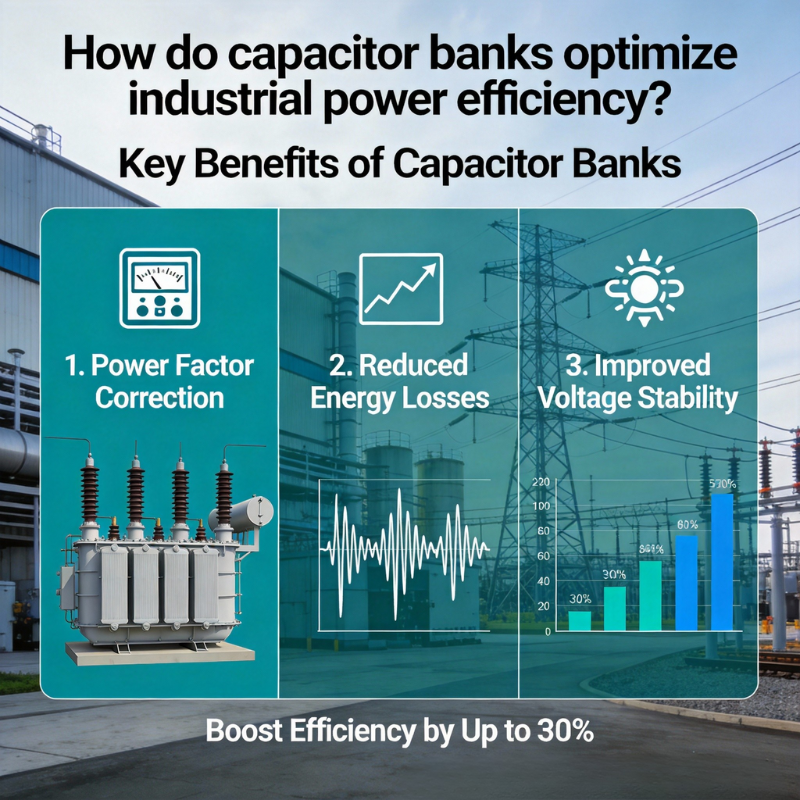
Capacitor Banks and Power Factor Correction
Why inductive loads degrade power factor—and how capacitor banks restore balance
Equipment like industrial motors and transformers need something called reactive power (measured in kVAR) to keep those magnetic fields going. Think of it as current that goes back and forth without actually doing any real work. What happens? We get what's known as lagging power factor when the current isn't quite in sync with the voltage anymore. The waveforms just don't line up properly. When power factor drops low, all sorts of problems pop up. Generators, transformers, and everything in between have to handle way more current than needed for the actual work being done (which we measure in kW). This puts extra strain on the whole system and creates more energy loss along the way. That's where capacitor banks come into play. These devices basically provide their own version of reactive power right where it's needed, matching up perfectly with the voltage cycle. They sort of cancel out the extra demand from inductive loads. The result? A better power factor closer to 100%, less stress on the grid, and overall improved efficiency. Take milling operations for instance. Installing a 200 kVAR bank there can push power factor from around 0.75 up to 0.95. That means factories are drawing almost 60% less unnecessary reactive power while still getting the job done.
Achieving unity power factor: The role of tuned and automatic capacitor banks
Fixed capacitor banks work well for steady loads from an economic standpoint, though they can actually cause problems if the load changes much over time. For places dealing with variable speed drives or serious harmonic distortion issues, tuned capacitor banks come with built-in series reactors that help adjust those pesky resonance frequencies before they become major headaches. When things get really dynamic on site, automatic capacitor banks step in with their microprocessor controlled contactors and those fancy real time power factor sensors. They can adjust capacitance levels almost instantly as conditions change. These smart systems keep power factors consistently above 0.99 even during sudden motor startups or unexpected load fluctuations something absolutely necessary in precision manufacturing settings. Looking at actual performance numbers, automated systems typically keep voltage deviations below 2 percent, completely remove the need for hands-on adjustments, and cut down power factor penalties by around 92% versus traditional fixed setups according to recent industry benchmarks.
Capacitor Banks Reduce Energy Costs and Improve ROI
Avoiding utility penalties: How power factor <0.95 triggers demand charges and kVAR fees
A lot of utility companies start charging extra money when an industrial facility's power factor drops below 0.95, usually through things like kVAR charges or demand fees. This happens because all those extra currents flowing from equipment like motors put extra strain on the electrical grid. Capacitor banks help solve this problem by providing the needed reactive power right at the source instead of drawing it from the main supply line. Facilities that manage to keep their power factor consistently above 0.95 often see their monthly electric bills drop anywhere between 8% to 12%. The cost savings typically kick in pretty much right away once these systems get installed and running properly.
Real-world ROI: 12–24 month payback and $217K annual savings in steel manufacturing
Investing in capacitor banks tends to give some of the fastest returns on energy efficiency investments for industrial operations, usually paying itself back within about a year or two. Take one steel plant we worked with recently they cut their monthly kVAR charges by $18k after installing an automatic capacitor bank system, which translated into around $217k saved each year. But there's more than just money saved on bills too. The same upgrade actually cut down transformer losses by nearly 20% and made their switchgear last longer before needing replacement. For businesses running equipment that draws a lot of inductive power, these kinds of installations represent smart money moves that don't carry much risk while delivering real benefits across multiple fronts.
Capacitor Banks Minimize System Losses and Extend Infrastructure Life
Cutting I²R losses by up to 30%: How localized reactive power support reduces circulating current
When dealing with inductive loads, what happens is that they actually boost the total amount of current flowing through various components like cables, busbars, and transformers. This includes not only the real current we typically think about, but also this other thing called reactive current. Now here's why this matters: those resistive losses (the ones calculated using I squared R formula) get worse as the square of the current increases. So even small reductions make a big difference. For instance, cutting down on current by just 20% can slash these losses by around 36%. That's pretty impressive when looking at energy bills. Installing capacitor banks near where these major inductive loads are located helps supply the needed reactive power right there at the source. This stops all that extra reactive current from traveling throughout the entire distribution network. Factories and plants that keep their power factors above 0.95 have seen reductions of up to 30% in those overall I squared R losses across their systems. And according to recent studies published by the IEEE Power Engineering Society back in 2023, this approach works well in practice. What does this mean for operations? Less wasted energy and equipment running cooler while being more efficient overall.
Lower thermal stress: 15–20% longer lifespan for transformers, cables, and switchgear
When power factor drops below acceptable levels, excess current flows through electrical systems which raises operating temperatures due to I squared R heating effects. This heat buildup speeds up the aging process of transformer insulation, causes damage to cable dielectrics over time, and wears down the contacts inside switchgear equipment. Installing capacitor banks helps tackle this problem head on by cutting down the total amount of current running through the system, which naturally reduces the thermal stress on components. According to recent findings from EPRI in their 2023 study, simply dropping transformer winding temperatures by 10 degrees Celsius can actually double how long the insulation lasts before needing replacement. Plants that keep their power factor within recommended ranges typically see service life extensions of around 15 to 20 percent for key infrastructure pieces. This means fewer unexpected capital investments for replacements and significantly reduced maintenance costs across the board.
Capacitor Banks Enhance Voltage Stability and System Capacity
Capacitor banks help keep voltage levels steady throughout industrial power systems. They work by storing extra reactive energy when demand is low and then releasing it back into the system when there are sudden spikes in usage. This process prevents those annoying voltage fluctuations that can damage sensitive machinery down the line. When these capacitor banks reduce the amount of reactive current coming from transformers upstream, factories actually gain around 15% more capacity without needing new infrastructure. Most equipment will start acting up if voltages drift outside of ±5%. But good quality capacitor installations typically keep things regulated within ±2% range. And guess what? They cut down on those pesky voltage spikes by about 30% too. The real magic happens because capacitors respond so fast compared to older mechanical systems. We're talking 200 to 500 milliseconds quicker reaction times, which means no interruptions when big motors kick in or feeders experience problems. Plus, all this stability makes integrating renewable energy sources much easier since it balances out the natural voltage variations caused by solar panels and wind turbines. Not to mention helping control those annoying harmonics that creep into electrical circuits over time.
FAQ
What is a capacitor bank?
A capacitor bank is a group of several capacitors of the same rating that are connected in series or parallel within an electrical power system to provide reactive power directly at the source of consumption.
How does a capacitor bank improve power factor?
Capacitor banks introduce leading current, which cancels out lagging current caused by inductive loads, thereby aligning the phase difference between voltage and current, leading to an improved power factor.
Why are capacitor banks important in industrial settings?
In industrial settings, capacitor banks decrease the reactive power demand from the grid, reduce energy costs, minimize system losses, and prolong the life of electrical infrastructure by reducing overall current flow and thermal stress.
What are the economic benefits of using capacitor banks?
Economic benefits of using capacitor banks include reduced utility charges from improved power factors, reduced I²R losses, lower maintenance costs, and extended lifespan of electrical equipment, leading to a rapid return on investment.
How do automatic capacitor banks differ from fixed capacitor banks?
Automatic capacitor banks are equipped with microprocessor-controlled systems that dynamically adjust their capacitance based on real-time power factor requirements, while fixed capacitor banks maintain a constant capacitance level suitable for steady load conditions but not for fluctuations.