
 EN
EN



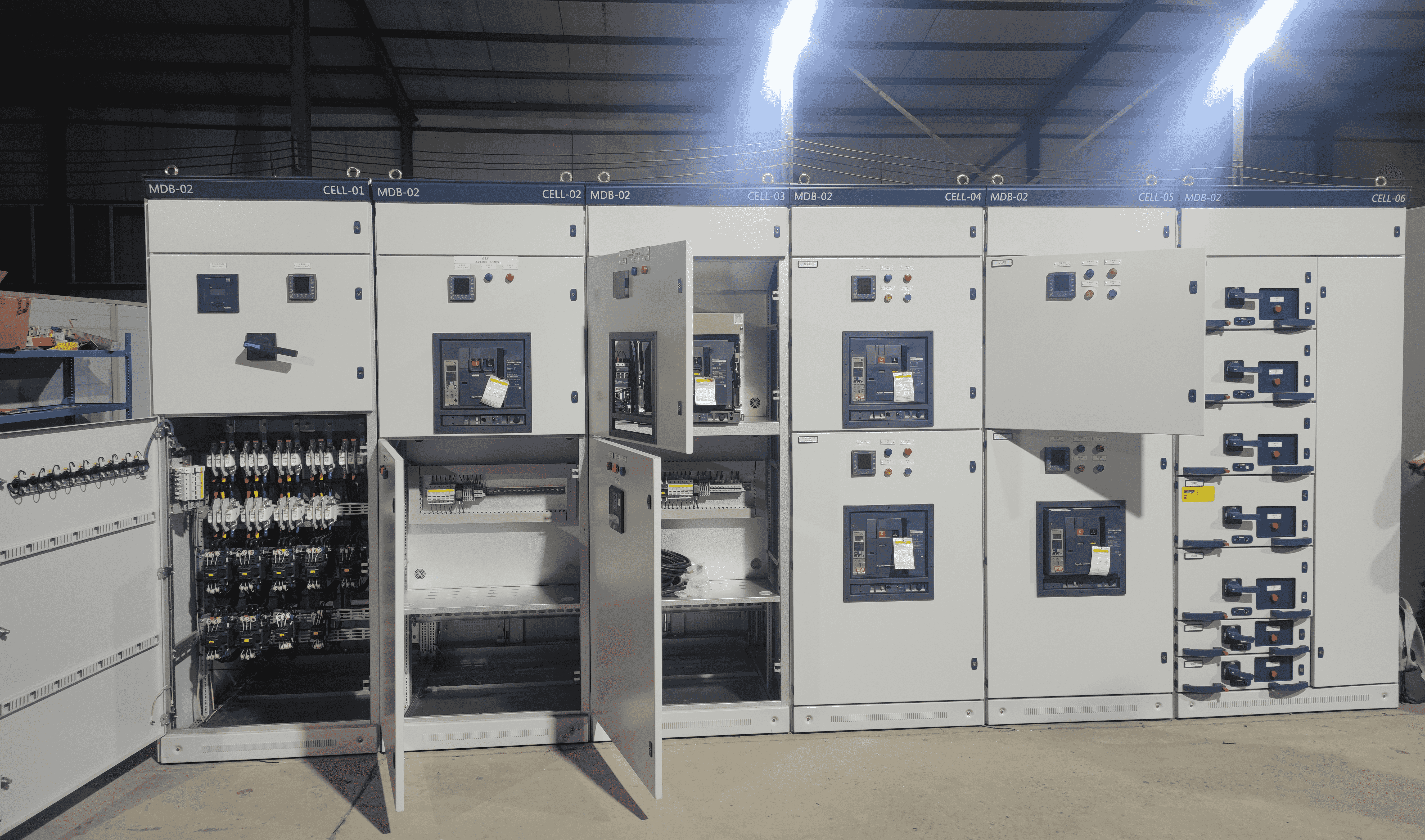
Understanding Industrial Power Distribution Requirements
Voltage, Phase, and Load Demands in Industrial Settings
Power distribution panels in industrial settings need to handle strict specs regarding voltage, phase balance, and load capacity when running heavy equipment. The majority of manufacturing plants these days depend on 480V three phase power systems because they work so well for powering everything from big electric motors to computer controlled machining centers and fully automated assembly lines. According to recent industry research from IMEA Corporation in 2023, around two thirds of manufacturers insist on keeping voltage fluctuations under plus or minus 2 percent. Why? Because even small drops can shut down entire production runs and cost thousands. What's interesting is how much power these machines actually draw when first turned on – often reaching over twice their regular operating level during startup.
Scalability and Modularity Needs in Modern Facilities
Today's industrial facilities need power systems that can grow and adapt alongside changing production demands. Many manufacturers are turning to prefabricated busway systems and modular circuits for this reason. These setups have shown real world benefits, with some food processing operations reporting capacity boosts around 40% after implementing smart refrigeration systems connected through the Internet of Things. The flexibility extends further when companies install plug-in circuit breakers within their distribution panels. This approach cuts down on the time wasted during system reconfigurations by roughly half compared to older hardwired alternatives. For plant managers dealing with frequent line changes or expansions, these kinds of improvements make a noticeable difference in day to day operations.
Case Study: Load Planning in a Medium-Sized Manufacturing Plant
A U.S. automotive parts manufacturer upgraded its electrical infrastructure to support a new robotic assembly line, achieving significant improvements:
| Parameter | Before Upgrade | After Upgrade |
|---|---|---|
| Peak Load Capacity | 250 kVA | 800 kVA |
| Voltage Stability | ±5% | ±1.5% |
| Expansion Slots | 0 | 6 modular |
By adopting tiered load-shedding protocols and a modular panel design, the plant achieved 99.8% operational uptime and reserved capacity for future 20% growth.
Key Types of Distribution Panels for Industrial Applications
Industrial environments rely on specialized distribution panels to ensure safe, efficient power management. The four primary configurations are:
Main Distribution Boards (MDBs) and Switchboards: Roles and Differences
Main Distribution Boards, or MDBs for short, serve basically as control centers that take the main power supply and divide it into smaller circuits protected by things like circuit breakers. Switchboards do something similar too, though they tend to focus more on what operators need when it comes to checking readings and making changes on site. The voltage capacity differs between these systems. Most MDBs work with voltages up to around 600 volts, while industrial grade switchboards can handle much bigger loads, sometimes going all the way to 1,200 amps. These heavy duty models usually feature reinforced busbars designed specifically for those situations where electrical demand is consistently high throughout operations.
Motor Control Centers (MCCs) for Production Line Efficiency
Motor Control Centers (MCCs) centrally manage and protect electric motors vital to manufacturing. A 2023 study showed MCCs reduce motor-related downtime by 34% versus decentralized setups. Integrated variable frequency drives (VFDs) optimize energy use while maintaining precise torque control for conveyors and machinery.
PLC Panels in Automated Industrial Environments
Programmable Logic Controller (PLC) panels serve as the operational brain of automated systems, processing inputs from sensors to coordinate robotic arms and assembly processes. Their modular architecture supports rapid reconfigurationâcritical given that 68% of manufacturers update production lines every three to five years.
Automatic Transfer Switch (ATS) Panels for Operational Continuity
ATS panels maintain critical operations during power outages by automatically switching to backup sources. In food processing, they prevent spoilage by restoring refrigeration within 10â30 seconds of grid failure. Advanced models include load-shedding logic to prioritize essential equipment during extended disruptions.
High-Voltage Switchgear and Main Distribution Systems
Function and Application of Industrial Switchgear in High-Power Settings
Industrial switchgear operates at voltages between 3.6 kV and 40.5 kV (Industry Analysis 2024), fulfilling three core functions:
- Isolating faulty circuits to prevent damage
- Regulating power flow across substations and production zones
- Facilitating safe maintenance via visible disconnection points
Designed for arc-flash mitigation and overload protection, modern switchgear achieves 99.98% operational uptime in sectors like metal refining and chemical processing. Integration with main distribution panels ensures seamless energy routing while complying with NFPA 70E safety standards.
Integrating Main Electrical Switchgear: A Petrochemical Plant Example
A Gulf Coast petrochemical facility upgraded to 33 kV gas-insulated switchgear, resulting in measurable gains:
| Metric | Before Upgrade | After Upgrade |
|---|---|---|
| Power Losses | 12% | 4.7% |
| Maintenance Downtime | 18 hrs/month | 2.5 hrs/month |
| Fault Response Time | 900 ms | 82 ms |
Equipped with pressure-sealed interrupters and IoT-enabled sensors, the system improved reliability in corrosive conditions. It now powers eight production units through centralized distribution while meeting API RP 540 fire safety standards.
Safety Standards and Regulatory Compliance for Distribution Panels
Core Electrical Safety Practices in Industrial Panel Design
Good industrial panel designs have several safety features built in to stop dangerous things like arc flashes, short circuits, and equipment breakdowns. The Occupational Safety and Health Administration requires things like emergency shut off switches, proper labels on insulated parts, and those lockout tagout procedures everyone talks about. According to UL 508A standards, conductors in wireways shouldn't take up more than about 25% of space to avoid getting too hot. And panels that meet NFPA 70E requirements for arc resistance can cut down injury risks by around 40% when something goes wrong during electrical faults, according to the Electrical Safety Foundation report from last year. Most facilities now include ground fault detection systems and enclosures rated IP54 as standard practice, especially where there's dust floating around or moisture in the air.
Meeting Compliance: NEC, IEC, and OSHA Requirements
Following NEC Article 409 means sticking to those North American voltage standards and making sure overcurrent protection is properly set up. For companies running facilities around the world, they typically follow two main standards at once: IEC 61439-2 for verifying performance and OSHA 29 CFR 1910.303 when it comes to keeping operations safe. An audit done by UL Solutions back in 2022 found something interesting about panels certified under both systems. These dual-certified units met requirements for NEC's shock prevention measures as well as IEC 61439's tests for handling short circuits. The result? Facilities using them saw about 30 percent fewer problems with electrical code violations compared to standard installations.
Balancing Cost, Performance, and Safety in Panel Selection
The NEMA did some interesting research back in 2023 showing that industrial panels with UL listings actually pay for themselves within around six years mainly because they keep things running longer between breakdowns and help cut down on insurance expenses. Now stainless steel enclosures might cost about 35 percent more upfront, but they really stand their ground when exposed to harsh environments, cutting equipment failures nearly two thirds compared to cheaper alternatives. When manufacturers take time to match the right IP rating like choosing between IP55 and IP65 based on what the environment actually throws at them, each panel ends up saving somewhere between eight thousand and twelve thousand dollars over time without messing with the required safety standards for electrical arcs. And let's not forget surge protectors integrated into these systems stop roughly four out of five warranty issues caused by those pesky voltage spikes that happen so often in industrial settings.
Custom and Smart Distribution Panel Solutions
Engineered Panels for Harsh or Specialized Industrial Environments
Distribution panels need special reinforcement when installed in harsh environments like chemical manufacturing sites, offshore oil rigs, and mining operations. These industrial grade panels come with stainless steel casings that resist corrosion, extra strong seals to keep out moisture, and explosion proof construction meeting either NEMA 4X or IP66 safety standards. For food production facilities, manufacturers often apply antimicrobial surface treatments and build enclosures that can withstand frequent cleaning according to FDA guidelines. The panels undergo rigorous testing across a wide temperature spectrum ranging from minus 40 degrees Celsius all the way up to 75 degrees Celsius. This ensures they continue functioning properly even under extreme conditions where standard equipment would fail.
Integrating Distribution Panels with Smart Industry and IIoT Systems
Smart distribution panels form the backbone of Industry 4.0 technology, incorporating IoT sensors along with communication standards such as Modbus TCP and PROFINET into their design. When it comes to monitoring electrical systems, these panels can detect current imbalances down to less than half a percent difference and spot temperature issues before they become problems. This capability allows for predictive maintenance work that keeps factories running smoothly instead of dealing with unexpected shutdowns. According to recent research from Deloitte back in 2023, manufacturers who implement this kind of system see around 45% fewer surprise stoppages. Industrial Automatic Transfer Switch (ATS) panels connected via IIoT networks will actually switch power sources when there's an outage happening and send diagnostic reports straight to control rooms where engineers monitor everything. Many industrial sites have reported saving roughly 18% on their electricity bills simply by using smart load management features built into modern distribution infrastructure.
FAQ Section
What is the importance of voltage stability in industrial power distribution?
Voltage stability is crucial because fluctuations can impact production runs. Keeping voltage fluctuations within ±2% ensures the continuous operation of machinery, avoiding costly interruptions.
How does modular panel design benefit industrial facilities?
Modular panel design allows facilities to adapt and expand their power distribution as production demands change, reducing reconfiguration time and enhancing operational flexibility.
What are the primary functions of industrial switchgear?
Industrial switchgear isolates faulty circuits, regulates power flow, and facilitates safe maintenance, ensuring high operational uptime and protection against arc-flash and overloads.
How do PLC panels enhance automated environments?
PLC panels process inputs from sensors to coordinate robotic processes, supporting rapid reconfiguration crucial for frequent production line updates.