
 EN
EN



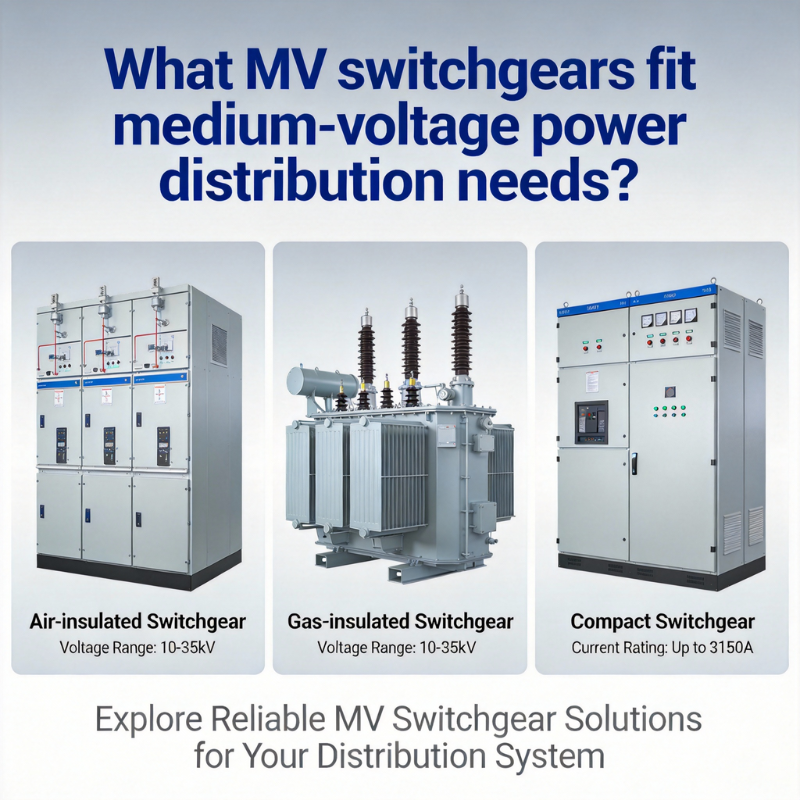
Core MV Switchgear Types and Their Distribution Roles
Air-Insulated (AIS), Gas-Insulated (GIS), and Hybrid MV Switchgear for Primary vs. Secondary Networks
Medium voltage switchgear comes in three main types based on how they're insulated: air insulated systems (AIS), gas insulated systems (GIS), and hybrids that mix both approaches. The air insulated version relies on regular air as its main insulating material. These tend to be cheaper options that can be maintained right on site, making them good fits for smaller distribution networks found in places like industrial zones or rural locations where there aren't extreme space constraints or super high reliability requirements. Gas insulated systems work differently by using pressurized SF6 gas or newer environmentally friendly alternatives. They offer better protection against electrical arcs, take up less room overall, and handle environmental challenges much better than their air counterparts. Because of these advantages, GIS equipment has become the go to solution for citywide power grids supporting essential facilities such as medical centers, transportation nodes, and server farms. Hybrid solutions represent a middle ground approach combining elements from both worlds. For instance, some installations might use GIS technology for internal connections while keeping traditional AIS components for external feeds. This mixed approach helps balance factors like installation costs, maintenance needs, and physical space limitations in parts of the grid where going fully GIS just doesn't make sense financially or operationally at this stage.
Application-Specific Form Factors: Pad-Mounted, Metal-Clad, Vault, and RMUs
Physical configuration is dictated by site constraints, accessibility, and operational priorities:
- Pad-mounted units are ground-level, tamper-resistant enclosures ideal for outdoor commercial and residential distribution—especially where overhead-to-underground transitions occur.
- Metal-clad switchgear, with draw-out circuit breakers and segregated compartments, supports high-availability requirements in primary substations at refineries, manufacturing plants, and utility interconnections.
- Vault installations allow fully underground deployment in dense urban corridors, minimizing surface footprint while maintaining thermal and moisture control.
- Ring main units (RMUs) provide compact, loop-fed switching for secondary networks—reducing fault impact radius and enabling rapid sectionalizing during outages.
Climate resilience directly influences selection: arid environments favor ventilated AIS; flood-prone or coastal zones require sealed GIS, elevated vaults, or IP66-rated RMUs. Solid-dielectric RMUs—now standard in solar farm interconnections and EV charging hubs—offer maintenance-free operation over 30 years, accelerating renewable integration.
Key Selection Drivers for MV Switchgear Deployment
Voltage Class (1–36/69 kV), Load Duty Cycle, and Environmental Resilience
Three interdependent factors govern optimal MV switchgear selection:
- Voltage Class: Must precisely match system operating voltage—e.g., 15 kV for municipal feeders, 27.6 kV for mining operations, or 36 kV for large industrial campuses. Underrating risks catastrophic insulation failure; overrating adds unnecessary cost and size.
- Load Duty Cycle: Continuous, high-current applications (e.g., data centers, aluminum smelters) demand switchgear rated for extended thermal withstand (e.g., 40 kA/3s), whereas intermittent loads (e.g., irrigation pumps) permit lower ratings.
- Environmental Resilience: Altitude reduces dielectric strength by ~1% per 100 m elevation; humidity >90% RH accelerates corrosion; salt, dust, or chemical exposure mandates IP54+ enclosures and conformal-coated components.
When these parameters don't line up properly, equipment failures become much more likely, somewhere between 40 to 60 percent more so according to field data. Take one real-world situation where 12kV switchgear was mistakenly installed on a 15kV line. The result? A series of dangerous arc flash events that ended up costing around seven hundred forty thousand dollars each time they happened, as reported by Ponemon Institute back in 2023. Looking at standards like IEC 60694 makes sense here because it contains those important altitude adjustment charts and dirt level classifications that engineers need when validating installations specific to particular sites. Industry professionals know that investing in corrosion-resistant materials and epoxy-coated bus bars might seem expensive upfront, about 15% more than standard options, but over time these choices actually reduce maintenance needs by roughly 30%. That kind of saving adds up pretty quickly across multiple installations.
Safety, Standards Compliance, and Sustainable Insulation in MV Switchgear
IEC 62271-200 and ANSI C37 Compliance for Arc Resistance and Interlocking
Worker safety cannot be compromised and is strictly regulated across the industry. Standards like IEC 62271-200 and ANSI C37.20.2 require switchgear equipment to demonstrate effective arc resistance. When certified, these devices need to contain any internal arcs without breaking their enclosures. They also have to channel the released energy through designated relief paths and incorporate materials that resist catching fire. Mechanical and electrical interlock systems play just as important a role. These mechanisms ensure workers follow proper safety procedures step by step. For instance, they prevent someone from opening up parts of the equipment that are still energized until all circuit breakers have been properly turned off and grounded. Such safeguards reduce accidents caused by human error significantly. Field data from utilities shows incident rates drop by around 70% when these protections are in place. Independent testing confirms whether equipment can handle at least 25 kiloamperes of short circuit current for one full second during simulated faults. This ensures the protective measures actually match what happens in real-world power grid failures.
SF6-Free Alternatives and Enhanced Air-Insulation Design Trends
Regulatory pressure and ESG commitments are accelerating the phaseout of SF6—the potent greenhouse gas with 23,500 times the global warming potential of CO2 (IPCC AR6). Leading manufacturers now offer commercially viable alternatives:
- Dry air/vacuum technology, leveraging optimized chamber geometry and pressure control, delivers full 36 kV dielectric performance without synthetic gases.
- Fluoroketone (C5-FK) blends, biodegradable and atmospheric-life <15 days, reduce climate impact by 99% versus SF6 while maintaining interrupting capability.
- Solid composite insulation, such as epoxy-resin barriers integrated into air-insulated designs, enables footprint reductions up to 40%—making air-based systems competitive with GIS in space-constrained settings.
Thanks to advances in computational field modeling, we can now manage electric fields with remarkable precision in air insulated systems, reaching voltages as high as 36 kV which used to require gas insulation. The new technology satisfies all the standards set by IEC 62271-200 for dielectric strength and arc testing. What's really impressive is how quiet these systems run, typically below 30 decibels so they're almost silent during operation. Plus, they completely eliminate those harmful emissions that plague older equipment. This shows that companies don't have to choose between environmental responsibility and top notch performance anymore.
FAQs
What are the main types of medium voltage switchgear?
The main types are air-insulated systems (AIS), gas-insulated systems (GIS), and hybrid systems that combine elements of both.
Where is gas-insulated switchgear typically used?
Gas-insulated switchgear is often used in citywide power grids, supporting essential facilities like medical centers and transportation nodes due to its compact size and reliable performance.
What factors influence the choice of MV switchgear?
Key factors include voltage class, load duty cycle, and environmental resilience, along with site-specific considerations such as space and climate conditions.
Are there alternatives to SF6 gas in switchgear?
Yes, alternatives such as dry air/vacuum technology, fluoroketone blends, and solid composite insulation offer environmentally friendly options without sacrificing performance.