
 EN
EN



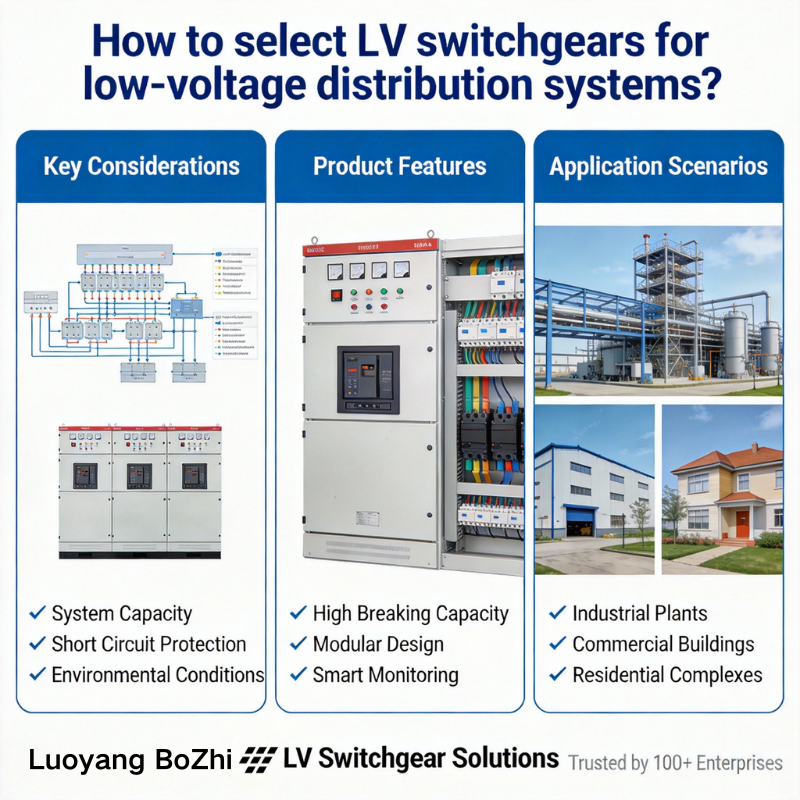
Understand System Requirements Before Selecting LV Switchgear
Analyze Load Profile and Duty Cycle for Accurate Capacity and Thermal Rating
Start with understanding how much electricity the system actually uses. Take notes on regular power consumption levels, look out for those spikes when motors start up, check for any weird distortions coming from variable frequency drives, and don't forget about those sudden power surges either. These measurements help figure out what kind of heat stress components like busbars, circuit breakers, and insulation might be facing. Many industrial automation setups need switchgear that can handle about 120% of normal load because they deal with repeated current rushes all day long. For equipment running continuously without breaks, proper cooling is absolutely essential. When companies underestimate how much heat builds up over time, insulation tends to wear out faster than expected, sometimes reducing machine life spans by around 30 to 40 percent. Always double check if the low voltage switchgear chosen for the job satisfies not just basic current carrying capacity but also meets those important thermal resistance standards outlined in IEC 60947-2.
Match LV Switchgear Type to System Architecture: Main, Feeder, MCC, and Emergency Configurations
Align switchgear design with your distribution hierarchy to optimize performance, safety, and maintainability:
| Configuration | Function | Critical Specifications |
|---|---|---|
| Main Distribution | Central power intake | High short-circuit rating (>50kA), integrated metering bays |
| Feeder Panels | Distribute to sub-circuits | Modular compartments, selective coordination capability |
| Motor Control Centers (MCC) | Drive heavy machinery | Combination starters, integral overload and short-circuit protection |
| Emergency Systems | Backup power transfer | Automatic transfer switches (ATS) with millisecond transition times, priority-based load shedding logic |
For mission-critical facilities like hospitals or data centers, prioritize ATS-integrated switchgear with â„100 ms transfer times to prevent process interruption. In humid or corrosive environments, specify IP54-rated enclosures per IEC 60529 to ensure long-term reliability.
Ensure Fault Protection and Coordination for Reliable LV Switchgear Performance
Calculate Fault-Level and Short-Circuit Current per IEC 60909 to Validate Breaking Capacity
Getting accurate fault level analysis done right matters a lot when making sure low voltage switchgear can actually stop those dangerous short circuit currents before something bad happens. According to standards like IEC 60909, folks working on these systems need to figure out both the symmetrical and asymmetrical fault currents across all distribution points. That means looking at how motors contribute and considering changes in transformer impedance too. The goal here is checking if protective devices have enough breaking capacity to handle what they might face. Many problems still come down to underestimating these values. A recent report from IEEE in 2023 showed that almost 4 out of every 10 equipment failures were due to this exact issue. When evaluating switchgear specs, don't just check them against normal operating conditions. Look at what happens in those really tough situations where everything goes wrong at once.
Achieve Selectivity: BreakerâFuse Coordination and TimeâCurrent Curve Alignment
Selectivity makes sure that only the protective device right before a fault actually trips, which keeps problems contained and maintains overall system operation. The key is aligning those time current curves properly so that devices further down the line respond quicker than ones upstream. Take feeders versus main breakers as an example setting them with shorter delays helps prevent unnecessary tripping. For automatic transfer switch installations, it's important to check if everything still works together when switching between different power sources like regular grid supply and backup generators. Field reports show that getting these curves aligned correctly cuts down on those big chain reaction outages by around 74 percent compared to setups without proper selectivity. Major utilities have seen this benefit firsthand over many years of operation.
Verify Compliance, Safety, and Environmental Suitability of LV Switchgear
Certification Standards: IEC 61439 Assembly Verification, UL 891, NEC Article 408, and BS EN Requirements
Getting proper certification isn't just recommended it's absolutely essential when it comes to safety issues, getting insurance approved, and meeting regulations. The IEC 61439 standard requires thorough checks of assembled equipment including looking at designs, testing prototypes, and conducting audits during production runs for all low voltage switchgear setups. Over in North America, the UL 891 standard ensures metal enclosed equipment can withstand structural stress and contain arcs properly. At the same time, the National Electrical Code Article 408 sets rules about how much space needs to be between components, proper grounding techniques, and what labels must appear where. For installations across Europe, following BS EN 61439 means addressing concerns like protection from shocks, determining pollution levels, and ensuring things hold up mechanically. Equipment without proper certification has been shown to raise the chances of arc flash incidents by around 72% according to last year's IEEE Global Safety Audit report. And let's not forget most insurance policies won't cover facilities using uncertified gear either. Before accepting anything, make sure those official test reports are available along with visible third party approval marks somewhere on site.
Installation Environment: IP Rating (IEC 60529), Space Constraints, Ventilation, and Accessibility
How equipment gets installed physically makes all the difference when it comes to how long it lasts and whether workers stay safe. When looking at protection ratings from IEC 60529, indoor substations need at least IP31 protection against dust and dripping water. But if the location is outside or subject to frequent cleaning with hoses, then IP54 or better becomes necessary to handle those harsher conditions. The National Electrical Code also has something important to say about workspace: keep at least one meter of space in front and 1.5 meters vertically so technicians can actually work safely without bumping into things. Ventilation matters too because heat kills insulation over time. According to IEC 61439 standards, every 10 degrees Celsius above what's rated cuts insulation life in half. That's why proper airflow through rear panel grilles is essential. Don't forget about seismic bracing where needed, and always ensure there's enough room to rack equipment properly. Installing in tight spots creates problems down the road when trying to insert breakers, shut systems down during emergencies, or even take thermal images for maintenance checks.
Evaluate Operational Readiness and Future-Proofing of LV Switchgear
Getting systems ready for operation means doing proper pre-commissioning tests first. This includes checking insulation resistance, running through mechanical operations, and verifying how protective relays actually work. When thinking about future needs, going modular makes sense. Designs that can grow over time are better than ones that need complete overhauls later on. Think plug-in compartments for feeders or breakers that can be upgraded in the field instead of replacing whole sections. Smart configurations should also keep pace with new tech developments. For instance, adding IoT monitoring helps spot problems before they cause real issues, cutting down unexpected shutdowns by around 30 to 40 percent according to industry reports. Systems also need to play nice with standards like IEC 61850 so they can talk to other parts of the smart grid. A good rule of thumb is keeping at least 20% extra capacity built in for when loads increase. And don't forget about sizing those neutral busbars properly to deal with the weird currents coming from solar panels and wind turbines these days.
Key enablers include:
- Maintenance Accessibility: Front-accessible components, thermal scanning windows, and standardized tooling
- Adaptive Protection: Digital relays with firmware-upgradable logic and fault-profile adaptation
- Energy Transition Preparedness: Oversized neutrals and harmonic-filter-ready busbar layouts
- Cybersecurity: Hardware-level encryption and secure boot protocols for networked monitoring
This dual focusâon immediate reliability and long-term adaptabilityâextends service life beyond 25 years and significantly lowers total cost of ownership, while maintaining alignment with evolving efficiency, safety, and decarbonization standards.
FAQ Section
What is LV switchgear?
LV (Low Voltage) switchgear refers to electrical equipment used for controlling, protecting, and isolating electrical circuits in low voltage systems, ensuring safety and efficiency in power distribution.
Why is thermal rating important for LV switchgear?
Thermal rating is crucial as it determines the ability of LV switchgear to withstand and dissipate heat generated during operation, preventing damage to components and extending equipment lifespan.
How does fault-level calculation affect LV switchgear?
Fault-level calculation ensures that LV switchgear can handle and interrupt fault conditions safely, reducing the risk of electrical failures and enhancing system reliability.
What are the key standards for LV switchgear compliance?
Key standards include IEC 61439 for assembly verification, UL 891 in North America for structural integrity, NEC Article 408 for installation rules, and BS EN 61439 for European installations.