
 EN
EN



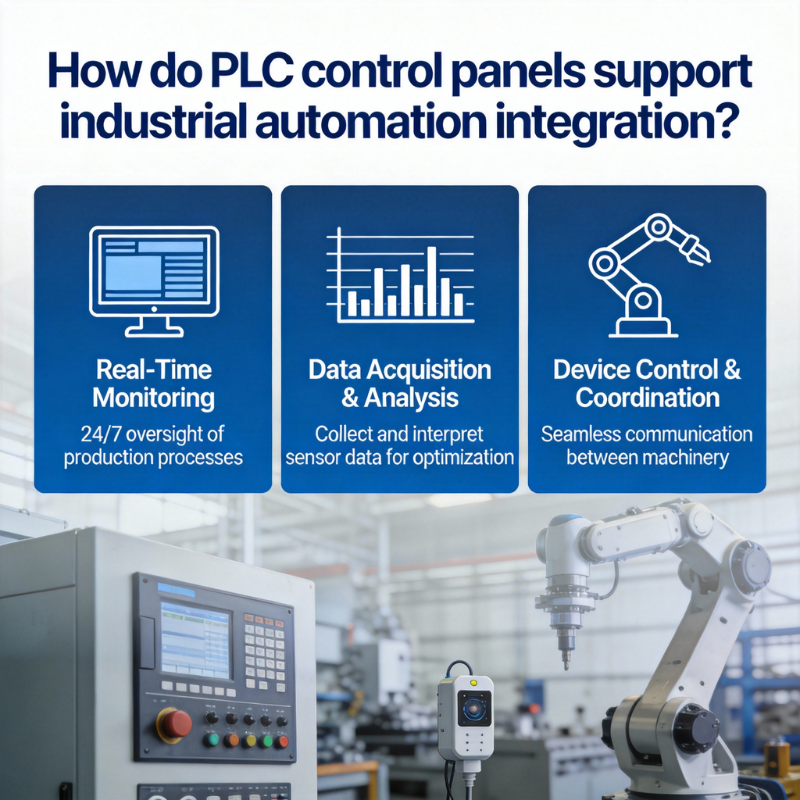
PLC Control Panel as the Central Integration Hub in Modern Automation Architectures
Hierarchical Role: Why PLC Control Panels Anchor Level 2 (Control Layer) in ISA-95 Frameworks
In the ISA-95 model, PLC control panels sit right at the heart of Level 2, which is all about real time control. These panels basically act as the go between for higher level supervisory systems (think Levels 3 and 4) and the actual machinery down at Level 1. The way they work matters a lot because PLCs handle processing logic, manage input/output signals, and keep those control loops tight with response times typically below 20 milliseconds. That kind of speed is what makes things like robotic assembly lines run smoothly without hiccups. Most modern control panels can juggle over 150 different I/O points these days while still connecting directly to MES and ERP systems through OPC UA protocols. No need for extra software layers or custom code to bridge gaps between systems anymore. From an engineering standpoint, this central role means better coordination and more accurate control when dealing with all sorts of different equipment and subsystems throughout a facility.
Real-World Impact: Unified Line Control Case Study â Automotive Tier-1 Supplier Using CompactLogix PLC Control Panels
One major automotive parts manufacturer tackled serious production delays from seven separate subsystems when they installed CompactLogix PLC control panels as central hubs for operations. Just six months later, the factory hit nearly 94% system integration, bringing together Ethernet/IP welding areas, Modbus/TCP conveyor belts, and those fancy vision guided inspection spots. The embedded OPC UA servers made it possible to share live data with their manufacturing execution system, which cut down unexpected stoppages by almost half thanks to better predictive maintenance practices according to IndustryWeek in 2023. When they synchronized motion control at 18 different workstations, overall production speed jumped 29%. This shows that going with centralized PLC systems works well for factories dealing with fast paced but scattered manufacturing setups.
Smart Connectivity: Integrating PLC Control Panels with HMI, SCADA, and IIoT Systems
OPC UAâEnabled Embedded HMIs: Replacing Legacy Silos with Secure, Web-Based Human-Machine Interaction
Modern PLC control panels now come with secure HMIs that work right in browsers, all built on OPC UA technology. These replace those old proprietary interfaces specific to each device with something more unified where different roles get appropriate access levels. The embedded systems offer real time diagnostics, manage alarms, and let technicians configure settings straight from encrypted web dashboards. Setup times have dropped dramatically compared to what they used to be. Traditional approaches needed special client software or custom gateways for everything. But with OPC UA enabled HMIs, data modeling works out of the box, historical trends are easy to track, and audit logs are automatically maintained. Plus, these systems meet those strict ISA/IEC 62443 security standards most plants require nowadays. What this means is companies can build centralized data lakes across their operations and run enterprise level analytics without dealing with complicated middleware layers that used to slow things down so much.
MQTT-to-SCADA Bridging Architecture: Enabling Scalable, Secure Edge Data Flow from PLC Control Panels
When we embed MQTT clients and brokers into modern PLC control panels, these panels become smart IIoT edge devices capable of sending out sensor readings and control signals using that lightweight publish-subscribe method everyone talks about. The system can handle around 10 thousand devices connected at once to each panel, which cuts down on data size by roughly 80 percent compared to old fashioned polling methods. Security isn't an afterthought either thanks to end to end TLS encryption plus some clever buffering techniques that keep things running smoothly even when networks get shaky. SCADA systems pick up all this information through standard MQTT brokers, so there's no need for expensive new hardware investments. This setup lets operators monitor key performance indicators in real time, optimize operations across entire fleets, and run advanced analytics in the cloud without sacrificing either timing precision or data protection standards.
Unified Data Integration via Industrial Protocols: Ethernet/IP, Modbus, and OPC UA
Bridging Protocol Fragmentation: How Modern PLC Control Panels Support Multi-Protocol Convergence
Most industrial sites run on a mix of different communication protocols these days. We see things like Ethernet/IP handling real time controls, Modbus RTU or ASCII taking care of older equipment, and OPC UA connecting various platforms together. This patchwork approach really drives up engineering expenses, sometimes pushing costs 30% higher according to Automation World from last year, plus it slows down when systems get put into operation. Fortunately, modern PLC control panels tackle this mess right at the source with their internal protocol translation capabilities. They can map Modbus registers onto OPC UA models, turn Ethernet/IP tags into MQTT topics, even bridge those old serial connections over TCP/IP networks. Best part? No need for extra gateway hardware sitting around somewhere. What does all this mean practically? Machines talk to each other smoothly without hiccups, companies keep their existing investments intact instead of throwing them away, and integration becomes much easier too, cutting down both time spent and money wasted by roughly 40%.
Future-Proofing with OPC UA PubSub over TSN: Real-Time, Time-Synchronized Data for Industry 4.0
The combination of OPC UA PubSub with Time-Sensitive Networking creates a communication system that works with incredible precision at the microsecond level. This setup lets PLC control panels send out synchronized sensor readings and control signals through regular Ethernet networks. What makes TSN special is how it manages network traffic, keeps everything perfectly timed, and can interrupt less important data when needed. These capabilities mean industrial robots, conveyor belts, and machine vision systems can work together with almost no delay between them. When paired with OPC UA's strong security features including encryption and proper user access controls, manufacturers get both lightning fast response times and protection against cyber threats. Companies that have implemented this technology are seeing around 95 percent improvement in latency compared to older fieldbus systems. This dramatic reduction opens up possibilities for smarter factory operations where machines can predict failures before they happen, optimize energy usage in real time, and adjust production schedules automatically based on current conditions.
Ensuring Reliability: Electrical Design, Validation, and Commissioning of PLC Control Panels
Reliability begins with rigorous electrical design grounded in NEC Article 409 and IEC 61439 standardsâaddressing arc flash mitigation, thermal derating, and EMI suppression at the schematic stage. Validation follows a three-phase methodology:
- Power-up verification, confirming circuit integrity and grounding continuity
- Functional testing, verifying logic execution under full load and voltage fluctuation
- Fault simulation, measuring response times of safety relays, e-stops, and protective devices
When commissioning work moves out into the field, technicians perform those critical loop checks, verify safety interlocks according to ISO 13849 standards, and make sure all termination points match what's shown on the actual construction drawings. Following these structured procedures based on industry standards cuts down on startup problems and fixes issues after commissioning about 40% more effectively than when people just wing it. The final set of documents includes things like UL 508A certifications, reports showing compliance with NFPA 79 requirements, plus records from ANSI/ISA 84 safety validations. These aren't just paperwork exercises they actually give maintenance staff clear guidance and concrete information that helps keep operations running smoothly over time.
FAQs
What role do PLC control panels play in automation architectures?
PLC control panels serve as the central integration hub in modern automation architectures, playing a key role in real time control, and seamlessly connecting with higher-level supervisory systems and machinery.
How do modern PLC control panels enhance production efficiency?
Modern PLC control panels enhance production efficiency by implementing advanced communication protocols like OPC UA and MQTT, which enable real-time data exchange, predictive maintenance, and seamless system integration.
What are the benefits of integrating PLC Control Panels with SCADA and IIoT systems?
Integrating PLC control panels with SCADA and IIoT systems allows for scalable, secure data flow, enables real-time monitoring, and supports enterprise-level analytics and optimized operations.
Table of Contents
- PLC Control Panel as the Central Integration Hub in Modern Automation Architectures
- Smart Connectivity: Integrating PLC Control Panels with HMI, SCADA, and IIoT Systems
- Unified Data Integration via Industrial Protocols: Ethernet/IP, Modbus, and OPC UA
- Ensuring Reliability: Electrical Design, Validation, and Commissioning of PLC Control Panels
- FAQs