
 EN
EN



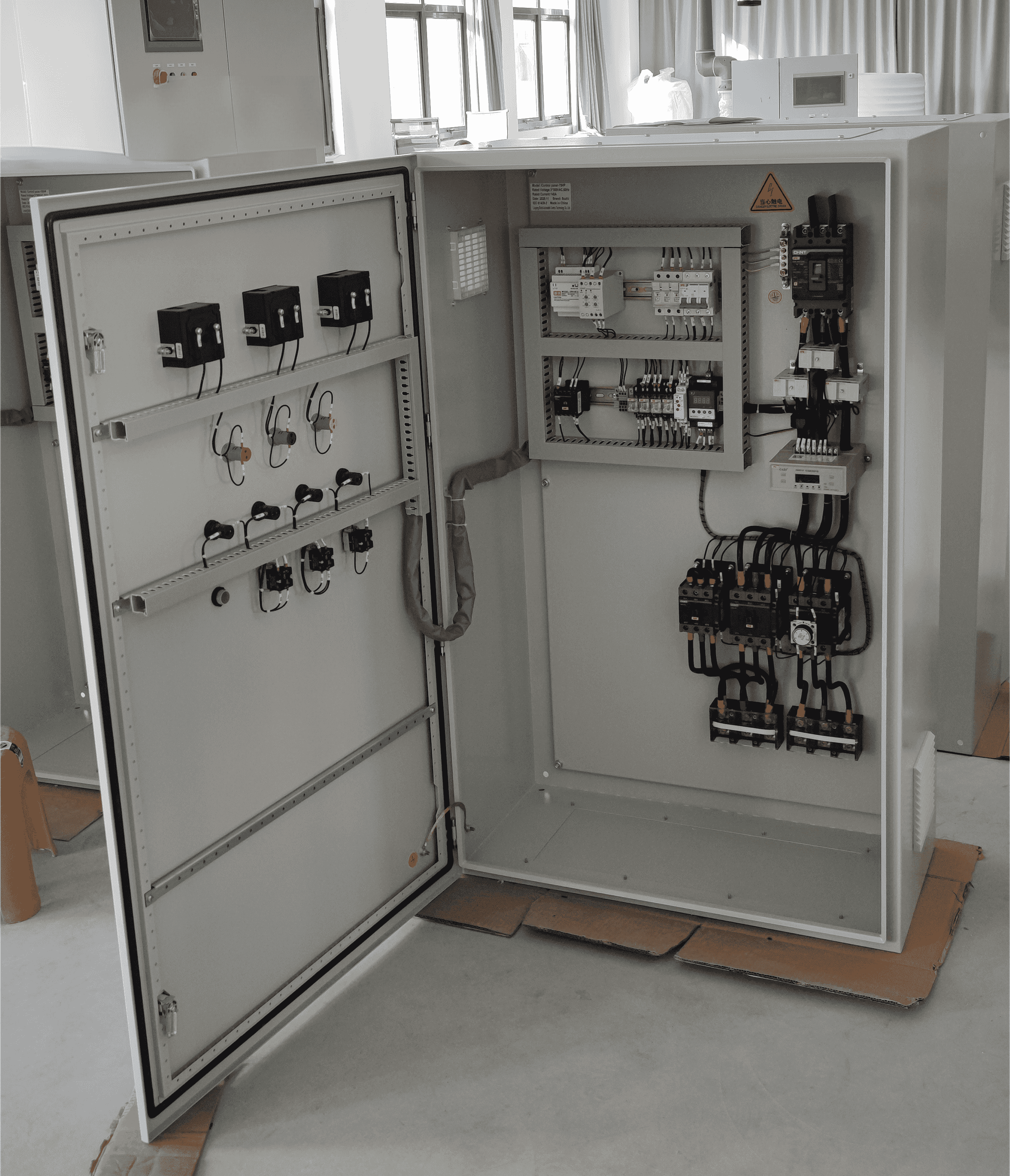
How Motor Control Panel Architecture Enables Remote Debugging
Modern motor control panel architecture enables remote debugging through integrated communication layers and hardened firmware. This design allows engineers to diagnose issues, perform updates, and monitor performance without physical access to industrial sites—reducing operational downtime and maintenance costs.
Embedded Communication Protocols: Modbus TCP, EtherNet/IP, and OPC UA Support
Standardized industrial protocols form the backbone of remote connectivity:
- Modbus TCP/IP delivers simple, reliable data exchange for real-time motor parameters—including voltage, current, and temperature.
- EtherNet/IP supports high-speed, synchronized control across distributed systems, enabling precise coordination of multiple drives and sensors.
- OPC UA (Open Platform Communications Unified Architecture) provides vendor-agnostic, encrypted, and structured data transfer between controllers and diagnostic tools—essential for secure cross-platform interoperability.
Together, these protocols transform raw sensor inputs into actionable insights accessible via SCADA systems or cloud-based dashboards. OPC UA's built-in security framework—featuring encryption, authentication, and role-based access control—ensures safe remote diagnostics without exposing control logic to unauthorized users.
Firmware Foundations: Secure Boot, OTA Updates, and Diagnostic APIs
Robust firmware underpins reliability and security during remote operations:
- Secure Boot validates firmware integrity at startup, preventing execution of tampered or unsigned code—a critical safeguard when applying patches remotely.
- Over-the-Air (OTA) Updates allow secure, non-disruptive deployment of firmware enhancements and security patches, reducing downtime by up to 70% compared to manual interventions (Automation Insights 2023).
- Diagnostic APIs expose standardized machine health data—including bearing vibration spectra, winding temperature trends, and insulation resistance—enabling predictive maintenance alerts before failures occur.
| Feature | Function | Impact on Remote Debugging |
|---|---|---|
| Secure Boot | Validates firmware authenticity | Prevents malware injection |
| OTA Updates | Enables remote firmware deployment | Eliminates onsite maintenance visits |
| Diagnostic APIs | Provides structured machine health data | Facilitates AI-driven failure prediction |
This layered architecture—combining interoperable protocols and cyber-secure firmware—creates a unified, scalable framework for safe and efficient remote troubleshooting across industrial networks.
Top Motor Control Panels Verified for Remote Debugging
Siemens SIMATIC IOT2050 + SIRIUS ACT Integrated Panels
When combined with SIRIUS ACT motor starters, the Siemens SIMATIC IOT2050 industrial PC creates a motor control panel system that works really well for remote diagnostics purposes. The device comes with an embedded OPC UA server which sends encrypted data according to industry standards either to cloud services or local analysis software. Integration with TIA Portal makes it easier to track down problems when they occur. Plus there are security features built right into the hardware such as secure boot processes and trust anchors that stop anyone from tampering with firmware during those remote access sessions. What's truly valuable here is how diagnostic APIs provide detailed measurements like winding temperatures over time and vibration patterns across different frequencies. These insights allow maintenance crews working from afar to spot early warning signs of potential issues long before they become serious problems that require onsite intervention.
Rockwell Automation GuardLogix + PanelView Edge with FactoryTalk Analytics
When Rockwell's GuardLogix safety controllers work together with PanelView Edge HMIs, they create motor control panels that meet SIL 3 and PLe standards for safe operation. These systems allow engineers to debug remotely through FactoryTalk Hub without compromising safety protocols. The CIP Security feature keeps all data transfers secure between equipment on the factory floor and the analysis software back at headquarters. It uses encryption so no one can tamper with important information as it moves across networks. FactoryTalk Analytics takes things further by looking at past performance records and spotting problems before they become serious issues. For instance, it might detect signs of worn bearings or imbalanced electrical phases long before operators notice anything wrong. When something looks suspicious, the system generates service requests automatically. Even when internet speeds drop or signal strength wavers on cellular networks, special bandwidth management techniques keep diagnostics running smoothly while still maintaining precise control over motors in real time.
Critical Implementation Considerations for Remote Debugging
Zero-Trust Network Segmentation and Secure Remote Access
When it comes to remote debugging, companies need to adopt what's called a zero trust approach. Basically, nothing gets automatic trust anymore, not even devices sitting right within the company's own network walls. For industrial setups, network segmentation makes sense. Split things up with VLANs or those software defined perimeters so motor control panels stay separated from regular IT systems. Old school VPNs are trouble waiting to happen since they just open up more doors for attackers. Better options include certificate based login checks, managing who has special privileges, and setting up temporary access rights only when needed. Microsoft found that adding multi factor authentication cuts down on stolen credentials by about 99.9%, though nobody really knows if that number is exact. Companies also need to run regular security tests and have solid policies ready for audits. These policies should cover how devices get added to the system, when sessions automatically end, and what happens when someone spots a breach. Keeping all this straight helps meet regulations while staying strong against attacks.
Latency, Bandwidth, and Real-Time Diagnostic Limitations
Network performance directly affects remote debugging fidelity:
- Latency exceeding 200ms introduces perceptible delays in command-response cycles.
- Bandwidth below 5 Mbps limits throughput for high-resolution waveform or video diagnostics.
- Packet loss above 30% degrades real-time streaming and event correlation accuracy.
To mitigate these constraints:
- Prioritize OPC UA and diagnostic traffic using QoS policies.
- Offload preprocessing to edge computing nodes—filtering noise, aggregating trends, and triggering alerts locally.
- Schedule bandwidth-intensive tasks—such as firmware uploads or full-system log exports—during scheduled maintenance windows or off-peak hours.
Proactive network capacity planning—not reactive troubleshooting—is key to sustaining reliable remote access without compromising operational continuity.
Choose Bozhi: Professional Motor Control Panel with Reliable Remote Debugging
Frequently Asked Questions (FAQ)
What is the role of embedded communication protocols in motor control panels?
Embedded communication protocols like Modbus TCP/IP, EtherNet/IP, and OPC UA facilitate remote connectivity and diagnostics by providing standardized, reliable data exchange, supporting synchronized control, and ensuring secure data transfers.
How do firmware features impact remote debugging?
Secure Boot, OTA Updates, and Diagnostic APIs enhance the reliability and security of remote debugging by preventing unauthorized code execution, enabling non-disruptive firmware updates, and providing access to structured machine health data.
What are some critical considerations for implementing remote debugging?
Key considerations for remote debugging include adopting a zero-trust network segmentation approach, ensuring secure remote access, managing latency, bandwidth, and considering real-time diagnostic limitations to maintain operational efficacy.