
 EN
EN



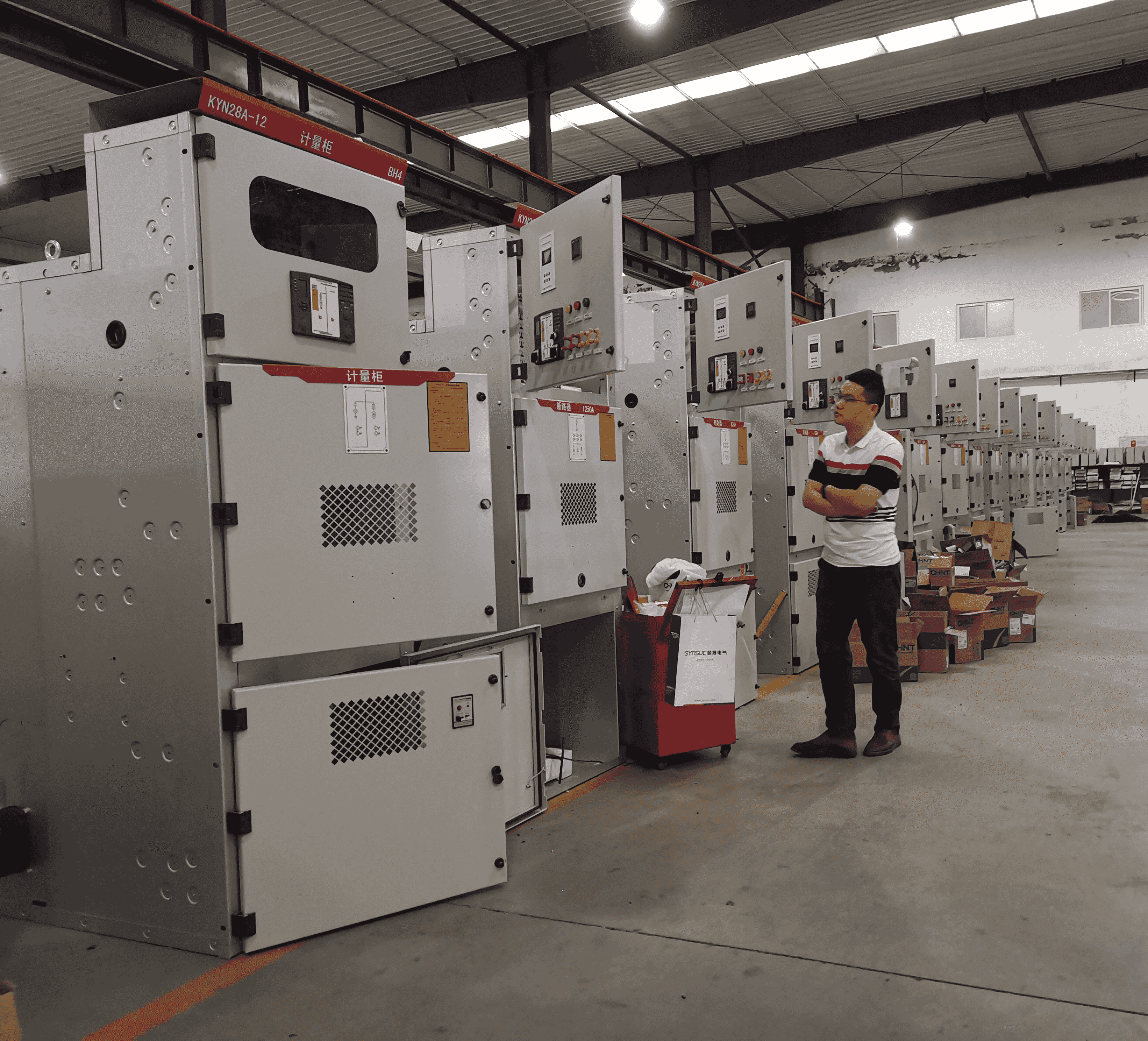
Understanding Commercial District Power Demands and LV Switchgear Applications
Matching LV Switchgear to Diverse Load Profiles in Commercial Buildings
Commercial districts require adaptable power distribution systems due to fluctuating energy demands across retail spaces, offices, and data centers. LV switchgear must accommodate varying load profiles—from continuous HVAC operations to intermittent high-demand equipment like elevators. Key considerations include:
- Peak vs. average loads: Retail complexes experience 40% higher evening surges (Energy Management Journal 2023), necessitating robust thermal tolerance.
- Harmonic mitigation: Modern LED lighting and IT equipment generate harmonic distortions, requiring integrated filters to prevent overheating and transformer derating.
-
Modularity: Scalable designs allow adding circuits during tenant expansions without system overhauls—enabling phased upgrades aligned with lease cycles or occupancy growth.
Selecting undersized units risks nuisance tripping during peak hours, while oversized systems increase capital costs by ~15% and reduce operational efficiency.
Voltage and Current Requirements in Mixed-Use and High-Demand Commercial Zones
Mixed-use developments combine residential, retail, and hospitality loads, demanding LV switchgear rated for 400V–690V systems with current-carrying capacities exceeding 6,300A. Critical factors:
- Voltage stability: High-density zones experience up to 8% voltage drop during peak hours, requiring automatic voltage regulators or dynamic reactive power compensation.
- Current coordination: Short-circuit currents above 50kA in central business districts demand instantaneous magnetic trip settings and selective coordination to isolate faults without cascading outages.
-
Environmental resilience: Outdoor installations in parking complexes or rooftop plant rooms need IP55-rated enclosures to resist dust, moisture, and corrosive urban pollutants.
Proper sizing prevents arc flash incidents, which account for 80% of electrical injuries in commercial facilities (NFPA 70E 2023).
Key Selection Criteria for LV Switchgear: Voltage, Current, IP Rating, and Scalability
Sizing LV Switchgear Based on Voltage Rating and Peak Load Forecasts
Getting the right size equipment starts with making sure voltage ratings match what the commercial system actually needs to run properly. Most low voltage switchgear can handle around 1000 volts, but facilities with mixed voltage areas need special attention so insulation doesn't get stressed out and components fail early. Looking at peak current demands matters just as much. Commercial areas typically see anywhere from 30 to 50 percent more electricity usage during business hours than when everything's quiet. Take a 4000 amp continuous rating for instance it has to cope with regular loads plus those brief spikes that happen when elevators start up or chillers kick in. The gear also needs to survive short circuits that are usually over 100 kiloamperes in busy downtown substation areas. It must meet all the specs outlined in IEC 61439-1 regarding how hot it gets, its ability to resist electrical breakdown, and how tough it is physically. Adding about 15 to 20 extra percentage points to these calculations gives some breathing room for unexpected changes in demand and prepares for whatever new equipment might get added down the road.
IP Rating and Modularity for Future-Proof, Environment-Resilient Installations
The ability to handle different environmental conditions really comes down to two main things: good ingress protection (those IP ratings everyone talks about) and systems that can grow over time. These IP ratings basically tell us how well equipment stands up against dust and water. Most indoor electrical setups need at least IP20 protection, but if we're talking about outdoor locations, basements, or places near the coast, then IP54 or better becomes necessary to keep out water sprays, salt air, and all sorts of tiny particles floating around. Modular design changes everything when it comes to scaling up operations. Instead of thinking about expansion later, companies can plan for growth right from the start. With ready made sections that just snap into place, businesses can easily add more circuit breakers, measurement tools, or even smart monitoring tech as their needs change. Take a real world example: expanding capacity by 25% using modular parts cuts downtime roughly 70% compared to tearing out old panels completely. Throw in materials that resist rust and busbar systems that stay stable regardless of temperature swings, and this kind of setup can last well over 20 years despite all the normal wear and tear from changing weather conditions and pollutants in the air.
Critical Safety and Protection Features in LV Switchgear for Commercial Use
Overload and Short-Circuit Protection: Coordination and I²t Matching
Good low voltage switchgear needs to work out how protective devices can isolate faults properly without messing up the circuits above them or causing problems for essential systems such as elevators, fire pumps, and heating ventilation air conditioning units. Thermal magnetic circuit breakers that match their I squared t characteristics help make sure that when there's a short circuit, the equipment further down the line gets just enough energy to stay safe, keeping damage under around 200 kiloamperes according to Plant Engineering magazine. The way this coordination works basically comes down to several key factors including...
- Selective tripping curves that prioritize fault location and minimize outage scope
- Current-limiting designs that suppress peak let-through current and incident energy
- Zone-selective interlocks (ZSIs) for grid-style networks, enabling sub-second discrimination between main and feeder breakers
Arc Flash Safety and Compliance with IEC 61439-1/2 Standards
Modern LV switchgear integrates arc-resistant construction tested to IEC 61439-1/2 standards, reducing incident energy below 8 cal/cm²—the threshold for second-degree burns—through three core design strategies:
| Arc Flash Mitigation Feature | Function |
|---|---|
| Pressure-relief ducts | Redirect explosive energy upward, away from personnel |
| Internal segregation | Isolate arcs within dedicated, reinforced compartments |
| Active optical detection | Trips within 2 ms using light-sensor arrays to halt arc propagation |
Compliance requires full-system verification—not just component-level testing—of dielectric strength, short-circuit withstand (≤65 kA/1 s), and temperature-rise limits under full-load conditions. When paired with NFPA 70E-aligned maintenance protocols and appropriate PPE, these features cut arc-related injuries by 72%.
FAQ
-
What are the primary considerations when selecting LV switchgear for commercial buildings?
Key considerations include adaptability for varying load profiles, peak vs. average load management, harmonic mitigation, and modularity to accommodate tenant expansions without full system overhauls.
-
How does voltage stability affect commercial power systems?
In high-density zones, voltage stability is crucial due to potential voltage drops during peak demand. Systems may require automatic voltage regulators or dynamic reactive power compensations to maintain stability.
-
What is the role of modular design in LV switchgear?
Modular design permits easy expansion by incorporating ready-made sections, reducing downtime and enabling future-proof installations capable of evolving with demand.
-
Why is ingress protection (IP) rating important for LV switchgear?
IP ratings indicate an equipment's ability to resist environmental factors like dust and water, ensuring reliability and longevity in varying conditions, particularly for outdoor or challenging locations.