
 EN
EN



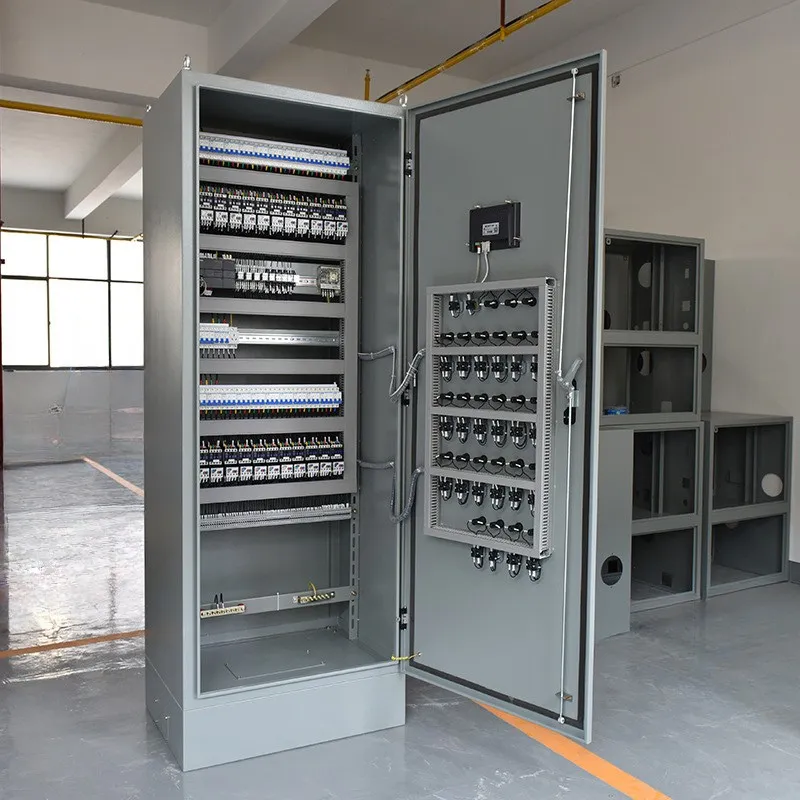
The Vital Role of PLC Integration in Modern Industry
In the competitive landscape of modern manufacturing, the Programmable Logic Controller (PLC) acts as the silent, powerful brain behind the machine. It is no longer just an optional add-on; it is the fundamental heart of any advanced automated system. Efficient operations depend heavily on the seamless integration of PLC control panels, which bridge the gap between complex digital instructions and physical mechanical movements. For plant managers, automation engineers, and facility owners, the goal is clear: minimize downtime, maximize precision, and ensure that data flows seamlessly from the factory floor to supervisory systems. Integrating a well-designed, professional-grade PLC panel is the most effective way to transform a collection of disparate machines into a unified, high-performance production line that can adapt to changing market demands with minimal manual intervention.
Architectural Design and Scalability
A successful PLC integration begins with robust architectural design. Too often, control panels are built as an afterthought, leading to disorganized wiring and impossible-to-diagnose faults that plague production for years. Industry-leading standards demand a modular approach where the PLC unit, I/O modules, and communication gateways are logically organized, clearly labeled, and optimized for signal clarity. This level of foresight is crucial because production requirements rarely remain static. A scalable control panel allows for future hardware upgrades—such as adding new sensors, high-precision motion controllers, or IoT data gateways—without requiring a complete system overhaul or expensive downtime. By focusing on thermal management, signal isolation, and ergonomic ease of access during the design phase, engineers can ensure that the system remains stable under extreme electrical noise and environmental stress, which is common in demanding heavy industrial settings.
Enhancing Operational Efficiency through Automation
The primary commercial value of PLC integration lies in the quantifiable, significant boost to operational efficiency. When machines are controlled by modern, high-speed PLCs, cycle times are shortened, and the margins for human error are effectively eliminated. In scenarios involving high-speed packaging, robotics, or complex chemical mixing, microsecond-level synchronization is required to maintain product quality. Modern PLC control panels provide this by processing high-frequency input data and firing output commands in real-time, allowing for a level of consistency that manual operation simply cannot match. Beyond raw speed, these systems offer advanced, integrated diagnostic capabilities. When a sensor fails or a motor reaches its thermal limit, the control panel provides specific, actionable error codes directly on the HMI (Human-Machine Interface), enabling maintenance teams to resolve issues in minutes rather than hours, thereby keeping the production rhythm steady.
Data Integration and Industry Standards
In the rapidly evolving era of "Industry 4.0," a PLC panel is far more than just a controller; it is a vital data hub. Integrating PLCs with Enterprise Resource Planning (ERP) and Manufacturing Execution Systems (MES) allows for real-time visibility into production performance. By leveraging communication protocols like PROFINET, EtherCAT, or OPC-UA, control panels can transmit production counts, material usage, and energy consumption metrics directly to the cloud or central servers. This data-driven approach shifts the maintenance paradigm from reactive to predictive. Rather than waiting for a component to break, technicians can analyze historical trends coming from the PLC to replace parts just before their expected failure point, significantly reducing the Total Cost of Ownership (TCO) and boosting the overall equipment effectiveness (OEE). This level of transparency is exactly what modern facilities need to maintain their competitive edge.
Safety and Environmental Compliance
Automation is a powerful tool, but it must be a safe one. A critical, yet often neglected, aspect of PLC panel integration is the incorporation of safety-rated components—such as E-stops, light curtains, and safety PLCs—directly into the control logic. Integrating safety functions into the PLC architecture ensures that the system enters a "fail-safe" state if any hazard is detected, protecting both the workforce and the valuable capital equipment. Furthermore, professional integration adheres to global standards like IEC 60204-1, ensuring that the control panel is compliant with international environmental regulations regarding electromagnetic compatibility (EMC) and energy efficiency. Compliance is not just a regulatory check-box; it is a hallmark of quality that signifies the system is built to last and safe to operate in diverse, strict international markets.
Expertise in Panel Manufacturing and Integration
The transition from a manual, inefficient process to a fully automated one is a delicate journey that requires precision engineering and a deep, practical understanding of electrical standards. BoZhi has established itself as an industry leader by focusing intently on the core technical requirements of high-performance automation. By combining state-of-the-art component sourcing with rigorous, disciplined assembly processes, BoZhi provides customized PLC control panel solutions that empower manufacturers to achieve peak performance. With a commitment to clean wiring, superior thermal regulation, and precise, understandable documentation, BoZhi ensures that every control system is not just operational, but optimized for long-term, stress-free reliability. By partnering with experts who understand the nuances of control panel manufacturing, companies can move forward with total confidence, knowing their production backbone is built on quality, innovation, and an unwavering commitment to efficiency.