
 EN
EN



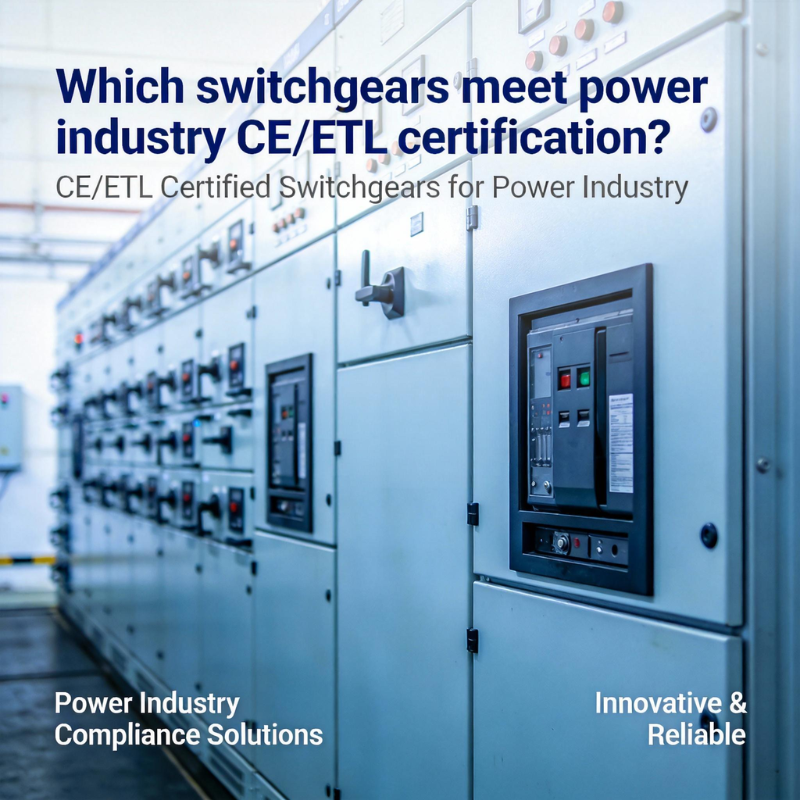
CE Certification Essentials for Switchgear in the EU Market
Low Voltage Directive (LVD) and EMC Compliance for Switchgear Safety and Interference Control
For industrial switchgear products wanting to enter the European market, getting CE certified means following two main directives: the Low Voltage Directive (LVD) 2014/35/EU and the Electromagnetic Compatibility (EMC) Directive 2014/30/EU. The LVD is all about keeping things electrically safe. Manufacturers have to build in protections against common dangers like shocks, overheating components, and those dangerous electrical arcs we all want to avoid. This typically involves things like properly rated enclosures (those IP ratings matter!), enough space between conductive parts (creepage and clearance distances), plus materials that won't catch fire easily when things get hot. Then there's the EMC side of things which deals with interference problems. Equipment needs good filtering built in, solid grounding practices, and proper shielding so it doesn't disrupt other devices nearby either by emitting too much EM radiation or being too sensitive to what others emit.
When companies fail to comply with regulations, they face some pretty steep penalties. Regulatory bodies can hit them with average fines of around $740,000 according to research from Ponemon Institute back in 2023. Worse still, non-compliant products might get pulled off shelves entirely or banned from certain markets altogether. For manufacturers wanting to show their stuff meets all requirements, there's no getting around validating designs against those industry standard specs. Think about IEC 61439-1 and -2 when dealing with low voltage switchgear setups. And don't forget about electromagnetic compatibility testing either. That means checking both immunity under IEC 61000-6-2 and emissions compliance per IEC 61000-6-4 standards. These aren't just bureaucratic hurdles but actual safety benchmarks that protect everyone involved in the supply chain.
When Machinery or ATEX Directives Apply to Integrated Switchgear Systems
When switchgear becomes part of machinery like automated production lines or robotic cells, the Machinery Directive 2006/42/EC kicks in. This means companies need to do proper risk assessments looking at things like how reliable the control systems are, whether emergency stops work correctly, and how all components interact safely with moving parts. Meanwhile, there's another important rulebook for places where explosions could happen. The ATEX Directive 2014/34/EU covers equipment in environments such as oil refineries, mines, and grain processing plants. For these dangerous settings, switchgear has to pass tough tests regarding fire prevention. Equipment in Zone 1 areas usually needs special protection measures either through flameproof enclosures marked Ex d or by using intrinsically safe barriers labeled Ex i. Temperature limits on surfaces also matter a lot here since they have to match specific gas groups and auto-ignition temperatures based on what kind of hazardous materials might be present.
Dual certification is mandatory where switchgear serves both automated machinery and hazardous areas. Technical documentation must clearly evidence conformity to both directives—particularly in shared elements like PLC interfaces, power supplies, and enclosure integrity—without conflating their distinct assessment criteria.
ETL Certification Requirements for Switchgear in North America
UL 508A vs. UL 845: Selecting the Right Standard for Your Switchgear Application
For switchgear entering North American markets, ETL certification confirms compliance with nationally recognized safety standards administered by an OSHA-accredited Nationally Recognized Testing Laboratory (NRTL). While both UL 508A and UL 845 address low-voltage industrial assemblies, their scope and intent differ fundamentally:
- UL 508A applies to industrial control panels—custom-built enclosures housing relays, contactors, motor starters, and programmable controllers—commonly deployed in discrete manufacturing and process automation. It emphasizes component coordination, short-circuit protection, and field-wiring safety.
- UL 845 covers motor control centers (MCCs): factory-assembled, modular systems with vertical bus structures, plug-in units, and centralized power distribution. Its requirements include busbar ampacity validation, thermal management under full-load conditions, and mechanical interlocking of draw-out units.
Getting the right standard depends mostly on what the system actually does, not just what voltage level it operates at. When companies get this wrong, big problems happen. Take for instance when manufacturers try to certify multiple motor control centers using UL 508A standards instead of the proper UL 845 specs. Industry audits back this up too. A look at data from 2022 showed nearly half (around 42%) of all certification holdups came down to picking the wrong standard initially. That's a huge number. Smart companies know they need to bring in those NRTL folks early in the design phase. Working closely with them while running those short circuit tests and thermal models saves money later on and gets products out the door faster. Nobody wants to spend extra cash fixing things after production starts rolling.
CE vs. ETL for Switchgear: Key Differences in Process, Oversight, and Market Access
Knowing how CE and ETL certifications differ matters a lot when deploying switchgear around the world. The CE mark basically means a manufacturer declares their product meets EU requirements like Low Voltage Directive, Electromagnetic Compatibility standards, Machinery regulations, and sometimes even ATEX rules. This gives them entry into all 31 countries making up the European Economic Area. Notified bodies aren't required for every product though – just those classified as high risk under specific directives such as ATEX or parts of the Machinery Directive. Still companies need to keep thorough records including technical documents, completed risk assessments, and all test results ready at all times since regulators might come knocking anytime to check compliance.
The ETL certification process works differently because it needs validation from an outside source that's recognized by OSHA as an NRTL, following both American and Canadian regulations like UL 845, UL 508A, or CSA C22.2 No. 14. The process goes beyond just checking samples at first. There are regular visits to factories, checks along the production lines, and repeat tests over time to make sure everything stays compliant. While this extra attention does take longer compared to getting a CE mark usually adding around four to six extra weeks it gives manufacturers greater confidence that their products will consistently meet quality and safety requirements throughout their lifespan.
The problem is that these certification marks aren't recognized across borders. CE marking won't cut it for products sold in the US or Canada, while ETL certification doesn't give manufacturers any standing when trying to get their goods into European markets. For companies looking to sell on both sides of the Atlantic, this means going through separate certification processes for each region. And trust me, nobody wants to deal with this headache late in the game. Getting these certifications sorted out right from the start saves everyone involved a ton of time and money down the road.
Avoiding Common Switchgear Certification Failures: Gaps, Testing Pitfalls, and Remediation
Arc Flash and Short-Circuit Testing Deficiencies in Low-Voltage Switchgear
When it comes to low voltage switchgear certification, arc flash containment and short circuit withstand capability form the bedrock requirements—and they're also where many systems fall apart during testing. The numbers tell a story too: around 30% of all rejected certifications trace back to problems with these very features not being properly validated. According to ANSI/IEEE C37.20.7 standards, arc flash tests need to confirm that compartments stay intact even under maximum incident energy conditions. Usually this means proving containment stays below 40 cal/cm² levels to keep workers safe from dangerous exposures. And let's talk about those short circuit tests specified in UL 1066 or IEC 61439-1 Annex BB. These aren't optional checks either. Equipment advertised as handling 65 kA frequently breaks down well before reaching half that capacity if the testing doesn't account for things like asymmetrical currents, DC offsets, or actual fault durations seen in field applications. Manufacturers who skip these details end up with products that look good on paper but fail spectacularly in real world scenarios.
Audits consistently identify three systemic gaps:
- Reliance on generic or legacy test reports rather than project-specific validation;
- Incomplete thermal-magnetic coordination studies—especially where upstream/downstream devices interact across multiple tiers;
- Exclusion of asymmetric current and DC component testing for modern rectifier-fed or renewable-integrated systems.
To get proper results from remediation work, we need to run full sequence checks on actual production units instead of just prototypes. This includes looking at things like dielectric withstand tests, checking contact resistance levels, making sure mechanical parts can last through their expected lifespan according to IEC 61439-1 Clause 10.3 requirements, and verifying how equipment performs when actually loaded. Industry standards like ANSI/NETA ATS set baseline requirements for these tests. For instance, they typically require components to survive at least 10,000 operational cycles before being considered reliable over time. Considering the massive costs associated with arc flash events which can hit facilities anywhere between hundreds of thousands to millions of dollars per incident according to Ponemon Institute research from 2023, sticking strictly to these testing protocols isn't just good practice but absolutely necessary. Without thorough testing aligned with established standards, companies risk both failed certifications and potentially dangerous situations in real world operations.
FAQ Section
What are the key directives for CE certification of switchgear in the EU?
The key directives for CE certification in the EU include the Low Voltage Directive (LVD) 2014/35/EU and the Electromagnetic Compatibility (EMC) Directive 2014/30/EU, with additional criteria under the Machinery Directive 2006/42/EC and ATEX Directive 2014/34/EU for integrated systems.
What is the main difference between UL 508A and UL 845 for switchgear in North America?
UL 508A applies to industrial control panels focusing on component coordination and field safety, while UL 845 covers motor control centers emphasizing modular systems, bus structure, and power distribution.
Can CE certification be used for switchgear products in North America?
No, CE certification is valid for the EU market, while ETL certification, recognized by an OSHA-accredited NRTL, is required for the North American market.
Why is it important to select the correct UL standard for switchgear?
Selecting the correct UL standard, such as UL 508A or UL 845, based on the application and function of the switchgear, helps avoid certification delays and ensures compliance with safety standards.
Table of Contents
- CE Certification Essentials for Switchgear in the EU Market
- ETL Certification Requirements for Switchgear in North America
- CE vs. ETL for Switchgear: Key Differences in Process, Oversight, and Market Access
- Avoiding Common Switchgear Certification Failures: Gaps, Testing Pitfalls, and Remediation
-
FAQ Section
- What are the key directives for CE certification of switchgear in the EU?
- What is the main difference between UL 508A and UL 845 for switchgear in North America?
- Can CE certification be used for switchgear products in North America?
- Why is it important to select the correct UL standard for switchgear?