
 EN
EN



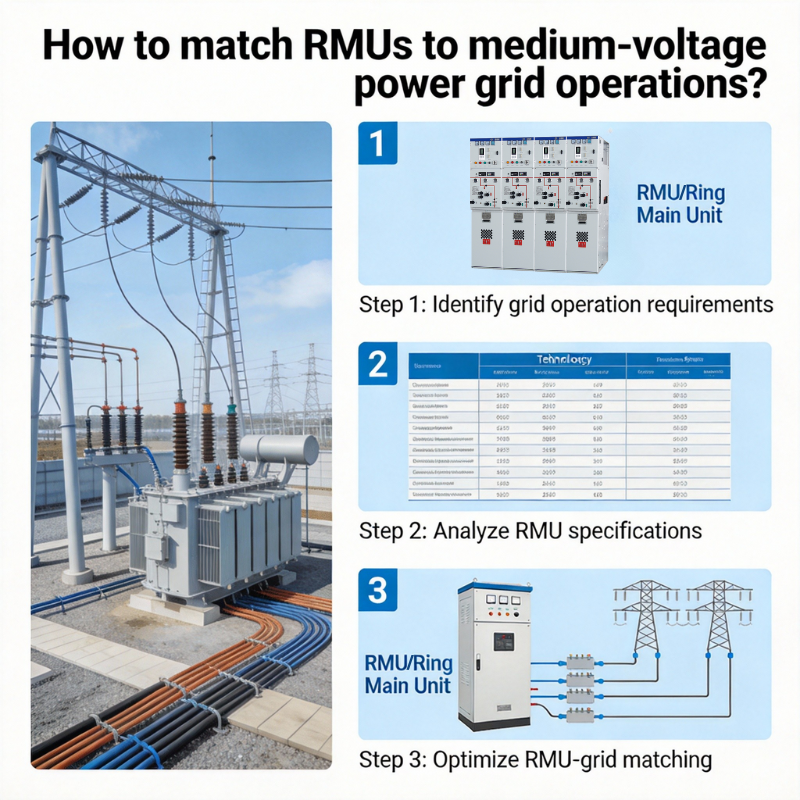
RMU Fundamentals: Role and Criticality in MV Ring Networks
Ring Main Units (RMUs) serve as the backbone of medium-voltage (MV) power distribution networks, enabling resilient electricity delivery through ring configurations that maintain continuous operations. These compact switchgear assemblies perform three critical functions:
- Connection management: Interlinking multiple feeders to create redundant power paths
- Operational switching: Safely isolating network sections for maintenance without disrupting overall supply
- Fault containment: Preventing cascading failures by localizing disruptions within 300ms
Ring architecture setups rely on RMUs to form these closed loop systems. When a transformer goes down, power automatically switches to neighboring units almost instantly, keeping things running with minimal disruption. The N minus one redundancy concept really matters in city power networks. Think about it: every hour of service interruption costs around $740,000 according to that Ponemon Institute report from last year. Placing these units strategically at key junctions helps reduce voltage loss across the grid. It also gets rid of those dangerous single point failure risks. Plus, during outages, technicians can manually restore power supplies without having to wait for automated systems to kick in. Most utility companies have found this approach works best when combined with regular maintenance checks.
Without RMUs, ring networks lose their self-healing capability–extending restoration times and weakening resilience against environmental stressors. Their sealed, space-efficient design makes them indispensable in dense urban environments where traditional switchgear is impractical.
Selecting the Right RMU Type: GIS, AIS, and Solid-Insulated Technologies
Performance Trade-offs: Footprint, Dielectric Integrity, and Lifecycle Cost
When it comes to medium voltage systems, there are three main options on the market today: Gas Insulated Switchgear (GIS), Air Insulated Switchgear (AIS), and those solid insulated Ring Main Units (RMUs). Let's start with GIS. These bad boys use sulfur hexafluoride gas which gives them amazing insulation properties packed into really small spaces. That makes them great for places where every square inch counts like urban substations or industrial facilities with limited room. But here's the catch - they cost a lot more money up front and face growing regulatory pressure because of their environmental impact. On the flip side, AIS equipment relies on regular old air for insulation. The good news is cheaper to install initially, but they need much more physical space and tend to break down faster when exposed to moisture or dirt in the environment. Then we have those solid insulated RMUs that actually encase all components inside epoxy resin material. They eliminate the need for any harmful gases and still keep things pretty compact. However technicians often run into problems with heat dissipation over time and repairs can get complicated since opening up these units isn't exactly straightforward.
Critical performance differences are quantifiable:
| Parameter | GIS RMU | AIS RMU | Solid-Insulated RMU |
|---|---|---|---|
| Footprint | 40–60% smaller than AIS | Largest dimensions | Comparable to GIS |
| Dielectric Strength | 3× atmospheric air | Baseline performance | 2.5× atmospheric air |
| 20-year TCO | Higher initial, lower maintenance | Lower initial, higher upkeep | Moderate initial, minimal maintenance |
Utilities must align technology choice with operational priorities: GIS excels where space premiums exceed 30% of project budgets; AIS suits rural networks needing expansion flexibility; solid-insulated units are future-proof where SFâ„ restrictions govern asset planning.
Application Drivers: Urban Density, Environmental Resilience, and Future Expansion Needs
The right RMU choice really depends on what's happening at the specific location. When we look at urban areas where land prices go above half a million dollars per acre, most installations end up going with GIS or solid insulated units because they can be buried underground in about nine out of ten situations. In places like coastal regions or industrial sites dealing with salt air or particulate matter levels over thirty-five micrograms per cubic meter, sealed enclosures from GIS or solid insulated designs become necessary. These systems maintain better than ninety-nine point nine seven percent reliability compared to around ninety two to ninety five percent for AIS equipment facing similar environmental challenges. For power grids expecting more than fifteen percent increase in demand, modular AIS setups actually work well since they allow adding new bays gradually without breaking the bank, typically costing between forty and sixty percent less than replacing existing GIS infrastructure. Generally speaking, GIS makes sense for those dense city centers that aren't changing much, while AIS is often better suited for rural areas needing expansion options. And don't forget about solid insulated systems when regulatory requirements around emissions play a big role in deciding what kind of assets get deployed.
RMU Operational Performance: Fault Isolation, Restoration, and Protection Coordination
Ultra-Fast Fault Clearance: Achieving <100ms Isolation in 11–33 kV Systems
Getting fault clearance down under 100 milliseconds matters a lot for those 11 to 33 kV power systems if we want to avoid damaging equipment and stopping outages from spreading. Modern ring main units handle this task thanks to their microprocessor relays which spot problems in just a quarter of a cycle time, around 5 milliseconds or so. When these sensors pick up something wrong, they kick in vacuum interrupters that stop fault currents before they reach 15 kA levels. What does this mean practically? Cables stay much cooler during these events, with thermal stress dropping by about 87% when compared to older breaker technology. Plus, voltage dips stay within what's allowed according to the IEC 62271-200 standards. Looking at real world performance data from actual installations, grids that meet these specs see roughly 92% fewer issues with transformers failing over time, according to recent research published by EPRI in their MV Protection Best Practices guide from 2023. These numbers point clearly to how important fast response times are for keeping our electrical infrastructure running reliably for years to come.
Restoration Strategies: Manual Sectionalizing vs. Automated RMU-Based Self-Healing
RMUs support two distinct restoration approaches:
- Manual sectionalizing, relying on visual fault indicators and crew intervention, typically restores power within 2–4 hours–suitable for rural grids with lower reliability expectations.
- Automated self-healing, enabled by RMUs with peer-to-peer communication and programmable logic controllers, isolates faults and reconfigures power flow through alternate paths in under 45 seconds. This cuts outage duration by 98% in urban settings (U.S. Department of Energy, Microgrid Reliability Report, 2024) and reduces annual operational costs by $740k per 100 RMUs deployed–particularly valuable where outage costs exceed $85/kWh, such as in hospitals and data centers.
Matching RMU Specifications to Grid Requirements: Load, Fault, and Protection
Fuse-Switch Coordination: I²t Matching and Let-Through Energy Control
When fuses and switches work together properly, RMUs can catch faults before they cause problems upstream or create bigger issues downstream. The I squared t method matches how much heat different components can handle so we don't get false trips when there are just temporary power surges. Controlling what gets through during short circuits helps stop those massive current spikes that damage equipment. Most 11 kV systems manage to keep these dangerous currents below about 50 thousand amps. Power companies put all these protections into place using several different approaches including...
- Curve harmonization: Aligning time-current characteristics between fuses and breakers
- Energy containment: Using current-limiting fuses to suppress fault energy
- Selectivity validation: Testing coordination at 150% of rated current
Validated I²t coordination slashes outage times by 40% (EPRI, MV Protection Best Practices, 2023) and significantly reduces mechanical and thermal stress on downstream assets. Always verify coordination curves against actual grid fault levels during RMU specification.
FAQ
-
What is the purpose of an RMU in medium-voltage networks?
RMUs primarily facilitate connection management, operational switching, and fault containment, ensuring continuous electricity delivery and network resilience.
-
Which RMU type is best for dense urban environments?
Gas Insulated Switchgear (GIS) or solid-insulated RMUs are ideal for dense urban areas due to their compact design and ability to be installed underground.
-
How do RMUs enhance fault isolation?
Modern RMUs use microprocessor relays for ultra-fast fault clearance, preventing equipment damage and minimizing outage potential.
Table of Contents
- RMU Fundamentals: Role and Criticality in MV Ring Networks
- Selecting the Right RMU Type: GIS, AIS, and Solid-Insulated Technologies
- RMU Operational Performance: Fault Isolation, Restoration, and Protection Coordination
- Matching RMU Specifications to Grid Requirements: Load, Fault, and Protection
- FAQ