
 EN
EN



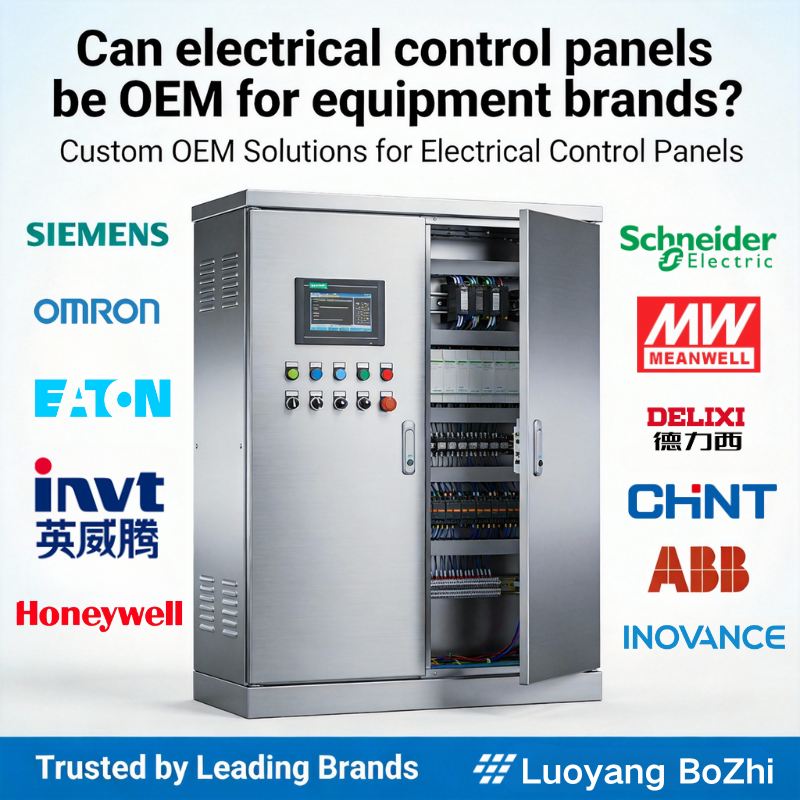
What OEM Electrical Control Panel Manufacturing Means for Equipment Brands
Build-to-Print Precision: Aligning Panels with Brand-Specific Functionality and Aesthetics
When it comes to making electrical control panels for original equipment manufacturers, the companies that make the equipment typically call all the shots. They decide everything from how components get laid out inside to what kind of software interface works best, plus specifics about voltage levels, safety shutdown points, and even things like branded colors or special finishes on enclosures. The whole point of this build-to-print approach is to make sure everything fits together perfectly with the main machinery. No one wants compatibility issues causing expensive breakdowns down the line. And let's face it, when control systems don't match up properly, factories lose money fast. According to research from the Ponemon Institute back in 2023, each incident costs around $740,000 in lost production time. Manufacturers then copy these precise designs for mass production, keeping quality consistent even in really tight spaces where every millimeter counts. Think about those robotic arms or small HVAC units where engineers rely heavily on 3D modeling and careful assembly techniques to fit everything just right.
OEM vs. Standard vs. Contract Assembly: Key Distinctions in Responsibility, IP, and Integration Scope
Electrical control panel manufacturing models differ fundamentally in accountability, intellectual property (IP) ownership, and technical scope:
| Panel Type | Design Responsibility | Branding Rights | Quality Control | Integration Depth |
|---|---|---|---|---|
| OEM | Equipment brand | Full ownership | Brand-led validation | Full machine embedded |
| Standard | Supplier | Supplier branding | Generic certifications | Limited customization |
| Contract Assembly | Third-party designer | Shared/licensed | Joint audits | Peripheral components |
When working with OEM partners, companies keep full control over their intellectual property and handle all aspects of meeting UL 508A standards themselves. This matters a lot when it comes to getting regulatory approvals and protecting against potential legal issues down the road. Contract assemblers on the other hand usually just put together the smaller parts without worrying about how everything works together as a whole system. A real world example comes from a food processing company that saved themselves from costly retrofitting later on. They actually sped up their production timeline by around 30% simply because they chose OEM solutions instead of regular panels right from the start according to our internal analysis back in 2023.
Critical Technical and Compliance Requirements for OEM Electrical Control Panels
UL 508A Certification as the Foundational Requirement for Safe, Market-Ready Panels
UL 508A certification stands as the minimum requirement for any industrial control panel wanting to sell throughout North America. The standard checks off several critical safety aspects that manufacturers must address before getting approval. Think about things like proper spacing between components, how heat builds up inside enclosures, whether grounding connections are solid enough, protection against dangerous arcs, and what kind of enclosure rating applies (NEMA 4X works well when there's moisture or chemicals around). Manufacturers who skip this step often face serious problems down the road. Their equipment might get shut down until fixed, insurance claims could be denied if something goes wrong, and they might end up in court - especially those working in industries where regulations run deep, such as making medicines or handling food products. From an equipment maker's standpoint, passing UL 508A tests isn't merely about ticking boxes on paperwork. Getting certified opens doors to new markets, keeps machines running reliably in tough conditions, and most importantly builds confidence among customers who need dependable performance day after day.
Design Constraints Driving Customization: Space, Signal Protocols, and Third-Party Equipment Interfaces
OEM panels are engineered not as standalone units but as mission-critical subsystems embedded within larger machines. Their customization is driven by three interlocking constraints:
- Spatial limitations: Panels must conform precisely to machinery footprints while preserving service access—often requiring CAD-driven layout optimization and custom mounting solutions.
- Protocol harmonization: Supporting legacy fieldbuses (e.g., Modbus RTU) alongside real-time industrial networks (e.g., EtherNet/IP) demands purpose-built protocol gateways and firmware-level coordination.
-
Cross-vendor interoperability: Pre-validated interfaces for PLCs, HMIs, and motor drives eliminate signal conflicts and reduce integration time by up to 40% versus off-the-shelf alternatives.
Together, these requirements elevate OEM panels from generic hardware to intelligent, context-aware control nuclei.
Strategic Benefits of Partnering with Specialized OEM Electrical Control Panel Builders
Working with specialized OEM panel builders gives companies benefits that go well past just saving money or increasing production volume. These builders have really focused knowledge about how industrial control systems work, know all the ins and outs of meeting regulations like UL 508A, NFPA 79, and IEC 61439, and handle those tricky situations where manufacturers need to produce many different products but in small quantities each time something that most companies cant do efficiently on their own. The end result? Equipment makers get access to these specialized skills and can focus more on what they do best instead of trying to become experts in everything themselves.
- Accelerated market entry, with pre-validated designs and certified processes cutting prototyping cycles by 30—40%;
- Cost optimization, shifting fixed R&D investment into scalable, variable production costs;
- Risk mitigation, embedding compliance and reliability into the build—not as an afterthought;
- Resource liberation, allowing internal engineering teams to prioritize core innovation over ancillary electrical systems.
This partnership model transforms control panels from operational bottlenecks into competitive differentiators. Leading brands report 25% higher field reliability metrics when outsourcing to UL 508A-certified OEM specialists—proof that technical alignment and process discipline directly translate to real-world performance.
Proven OEM Integration: How a Tier-1 Packaging Machinery Brand Scaled Reliability Through Panel Outsourcing
From In-House Bottlenecks to Certified Supply Chain Agility: The Partnership Journey
One major packaging equipment maker ran into serious trouble managing their internal panel assemblies. Their engineering team spent way too much time dealing with wiring issues, paperwork mountains, and getting through the UL 508A certification maze instead of working on their unique motion control systems and diagnostic capabilities. Quality problems kept popping up all over the place, creating headaches with regulatory compliance and putting delivery schedules at risk while customers started losing faith in their products. When they finally teamed up with an experienced UL 508A certified panel builder, things began to change. Instead of being stuck with limited capacity, they gained access to flexible manufacturing that could handle audits without breaking a sweat. The panel builder worked closely with existing PLCs and HMIs, made sure all documentation followed standard procedures, and kept track of everything throughout each panel's lifecycle. After about 18 months on the clock, machines stopped malfunctioning due to control issues around 40% less often, and bringing new products to market sped up by roughly 11 weeks according to internal metrics. What started as just another cost-cutting measure turned into something far more valuable - giving their own engineers back hundreds of hours to work on developing proprietary technology, all while maintaining panels that met strict standards and scaled up when needed.
FAQs
- What is the main purpose of build-to-print in OEM panel manufacturing? The main purpose of build-to-print is to ensure that all components and systems fit together perfectly with the main machinery, preventing compatibility issues and potential costly breakdowns.
- How does UL 508A certification benefit OEM electrical control panels? UL 508A certification ensures that the control panel meets critical safety requirements, enabling market access, reliable operations in challenging conditions, and customer trust through dependable performance.
- Why is partnering with specialized OEM panel builders advantageous? Partnering offers accelerated market entry, cost optimization, risk mitigation, and resource liberation, allowing companies to focus on core innovations while leaving complex panel building to experts.
- What challenges might arise without UL 508A certification? Without certification, equipment may face shutdowns, insurance claim denials, and legal issues, particularly in industries with stringent regulations.
Table of Contents
- What OEM Electrical Control Panel Manufacturing Means for Equipment Brands
- Critical Technical and Compliance Requirements for OEM Electrical Control Panels
- Strategic Benefits of Partnering with Specialized OEM Electrical Control Panel Builders
- Proven OEM Integration: How a Tier-1 Packaging Machinery Brand Scaled Reliability Through Panel Outsourcing
- FAQs