
 EN
EN



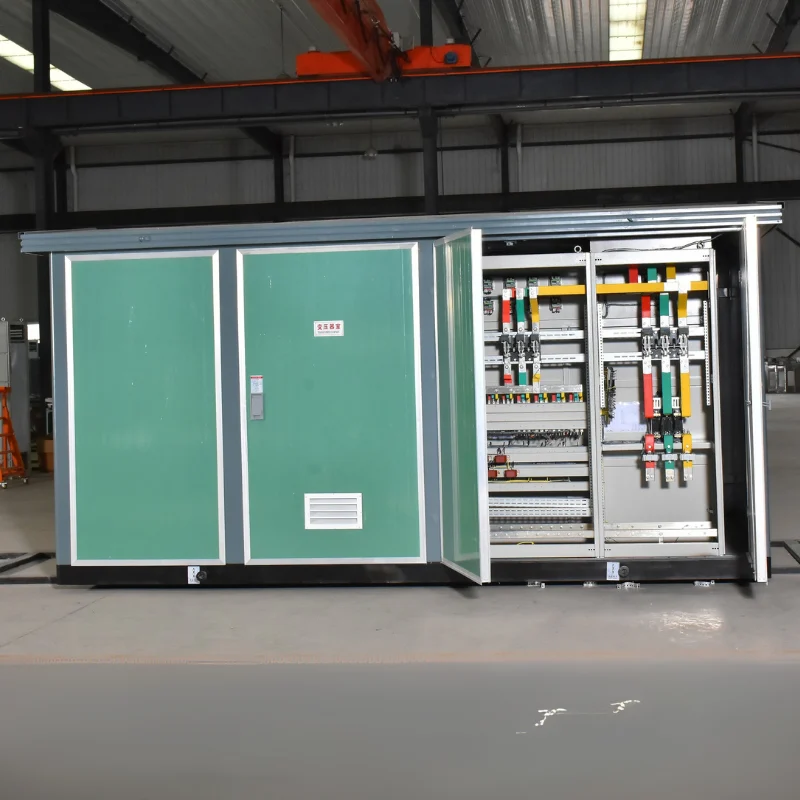
The Vital Role of Substation Design in Industrial Reliability
In the high-intensity world of industrial manufacturing, a substation is much more than just a collection of transformers and switchgear; it is the beating heart of the entire operation. Whether powering a massive automotive plant or a specialized processing facility, the design principles applied to an industrial substation dictate the difference between seamless production and catastrophic, profit-draining downtime. Reliability is built on a foundation of rigorous engineering, thoughtful component integration, and an unwavering commitment to safety. As industrial processes become increasingly automated and energy-intensive, the ability to distribute power efficiently and safely has shifted from a back-office engineering concern to a top-tier business priority. Designing a robust substation requires looking beyond initial costs to the long-term operational resilience that modern industry demands.
System Architecture and Scalability for Growth
The most successful industrial substations are designed with a forward-looking perspective. Industrial facilities rarely remain static; they evolve, expand, and adopt new technologies, which places evolving demands on the electrical distribution system. A principle of "modular scalability" is essential when mapping out the substation architecture. By utilizing flexible, bus-tie configurations and scalable distribution modules, engineers can ensure that future facility upgrades do not necessitate a complete overhaul of the power supply network. Furthermore, selecting systems that offer high-level redundancy—such as dual-transformer feeds—protects the business against single-point failures. Investing in a scalable design at the outset prevents the costly "patchwork" modifications that frequently plague aging facilities, allowing the site to grow seamlessly without compromising safety or reliability.
Component Selection and Thermal Management
At the technical core of the substation, the quality of individual components determines the overall system’s performance. High-performance transformers, reliable circuit breakers, and precision monitoring units are the building blocks of an efficient grid. However, selecting the right hardware is only half the battle; thermal management is the other. Heat is the natural enemy of electrical longevity. Professional design practices prioritize effective cooling strategies, whether through natural convection or forced-air systems, to prevent the "hot spots" that accelerate insulation breakdown. By optimizing the internal arrangement and ensuring that high-load components have sufficient clearance and airflow, designers can prevent the premature degradation of sensitive electronics. This approach directly impacts the Mean Time Between Failures (MTBF), providing the high uptime that facility owners expect.
Advanced Protection and Fault Isolation
An industrial substation must act as a sophisticated guardian for the downstream machinery. This requires a multilayered protection strategy that goes well beyond basic fuse protection. Modern design principles dictate the use of intelligent, communication-enabled protection relays that provide fast, selective fault isolation. When a fault occurs on a specific circuit, the system should identify and clear it locally, preventing a minor issue from cascading into a facility-wide power outage. This degree of selectivity is critical for maintaining high-level production targets. Furthermore, integrating digital sensors for arc-fault detection adds a vital layer of safety for site personnel, ensuring that the substation remains a secure environment. Reliable protection systems are not an expense; they are an insurance policy against the unpredictable nature of industrial electrical faults.
Maintenance and Lifecycle ROI
The true value of an industrial substation is realized over its entire lifecycle, not just at the moment of installation. Sustainable design practices focus on ease of maintenance, recognizing that even the most robust equipment requires periodic inspection and service. A design that prioritizes ergonomic access to components like terminal blocks, breakers, and monitoring interfaces significantly reduces the labor hours required for routine maintenance tasks. By documenting every aspect of the system and ensuring that spare parts are standardized and readily available, operators can drastically lower the Mean Time to Repair (MTTR). A substation that is designed to be maintained is a substation that will last, maximizing the return on investment and ensuring that the electrical infrastructure remains a productive asset rather than a maintenance burden for decades to come.
Expertise in Manufacturing and Engineering Excellence
Translating complex design principles into a functional, reliable substation requires more than just a blueprint—it demands precision manufacturing and deep industry expertise. Any error in assembly or component matching can undermine years of careful design work. BoZhi has established itself as an industry leader by focusing on the core engineering requirements of high-performance industrial power distribution. Through rigorous quality control, precision mechanical assembly, and the use of industry-grade materials, BoZhi provides customized substation solutions that empower manufacturers to achieve peak performance. With a focus on thermal regulation, ease of maintenance, and advanced protection, BoZhi ensures that every power distribution system is not just operational, but built for long-term safety and efficiency. Partnering with a manufacturer that understands the nuances of electrical physics is the most reliable strategy for building an industrial backbone that supports continuous, high-stakes operation.