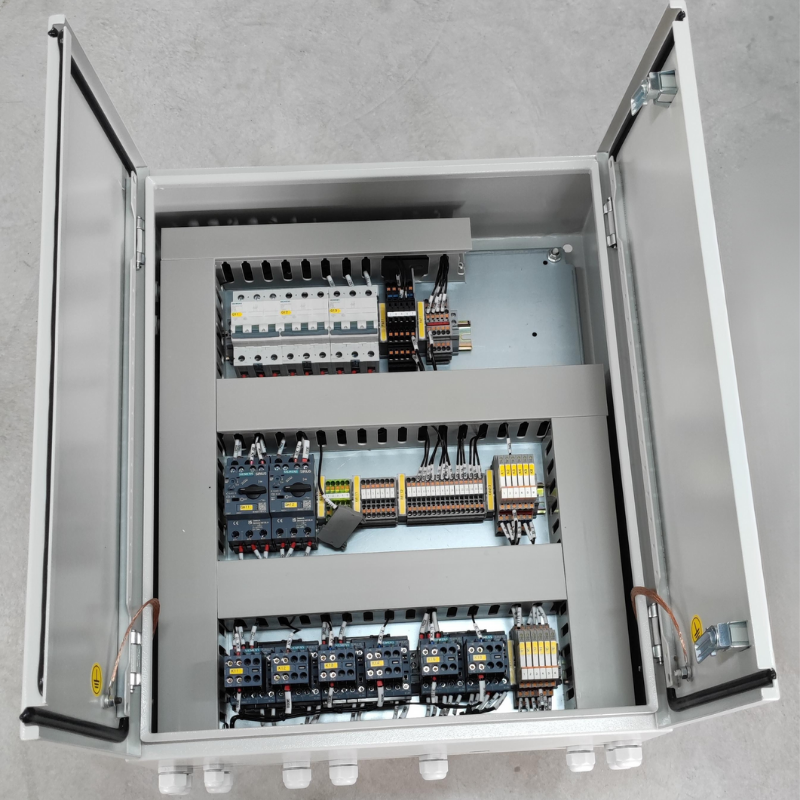
The implementation methodology for industrial control panels follows a systems engineering approach that balances functional requirements, safety considerations, and total cost of ownership. Electrical design begins with load analysis including inrush current calculations, harmonic distortion mitigation, and selective coordination studies between circuit protective devices. In oil and gas pipeline applications, control panels implement leak detection systems through pressure trend analysis and flow balance computations, while coordinating cathodic protection rectifiers and block valve actuators. For pharmaceutical bioreactor control, panels maintain strict sterility through validated sterilization-in-place (SIP) sequences, integrating temperature gradient control with dissolved oxygen profiling and nutrient dosing pumps. A case study in packaging machinery demonstrates how control panels with integrated vision systems achieved 99.7% defect detection rates through high-speed camera integration, while servo motion controllers provided registration control with 卤0.1mm accuracy. The manufacturing quality system encompasses material traceability through barcoded components, automated optical inspection for connection verification, and power-on testing with simulated load banks. Environmental considerations include the use of SF6-free switchgear, lead-free conformal coating for PCBs, and designs optimized for disassembly and recycling. Communication infrastructure supports both real-time control networks and enterprise data integration through OPC UA MQTT bridges, while maintaining network segregation through managed switches with port security. Reliability engineering incorporates derating guidelines per IEEE 1413, FMEA analysis for critical components, and environmental testing including humidity cycling and salt fog exposure. For comprehensive technical documentation and project-specific commercial proposals, please contact our engineering department with your application parameters and performance expectations.